


Pork neck is one of the most popular cuts of meat in Germany. Especially during the summer grilling season, this special meat can be found on almost every grill. Most commonly as a steak. But hardly anyone knows that pork neck can also be prepared in a completely different way. For example, as a whole roast or as a rolled roast.
In this guide, you will learn how it works, what you need to consider when preparing pork neck, and why it's worth it. Of course, we will also cover marinades and the right rub for pork neck. We have also provided a video here for you.
Grilling pork neck - the right preparation

The pork neck must, of course, be freed from bones and tendons. Your trusted butcher will debone it. We will go straight to the cutting and then show you what sections are in such a piece of meat and what they can be used for.
Let's start with cutting the pork neck. First, we remove the shoulder cartilage. This is inedible and would only make our meat unnecessarily tough. Of course, we don't want that, which is why we remove other pieces of cartilage afterward. To identify them, it's best to use your fingers and run them along the white areas of your pork neck.
If the component is soft, it is fat. Hard components, however, are cartilage that we need to remove. Afterward, we check the meat for any cartilage casings. These are residues that can still be on the meat, depending on the butcher's quality. If these are present, the cartilage casings must be removed. However, with us, you receive your pork neck already cleanly deboned and cut ready for cooking.
Finally, we only need to remove a little fat. Important, however: We do not remove all the fat from the pork neck. The fat keeps the pork neck nice and juicy, which is why we must leave some of it on the meat.

Now let's take a closer look at our cuts. We have bacon, bones, as well as lean and fatty sections. You can find more about this in this video.
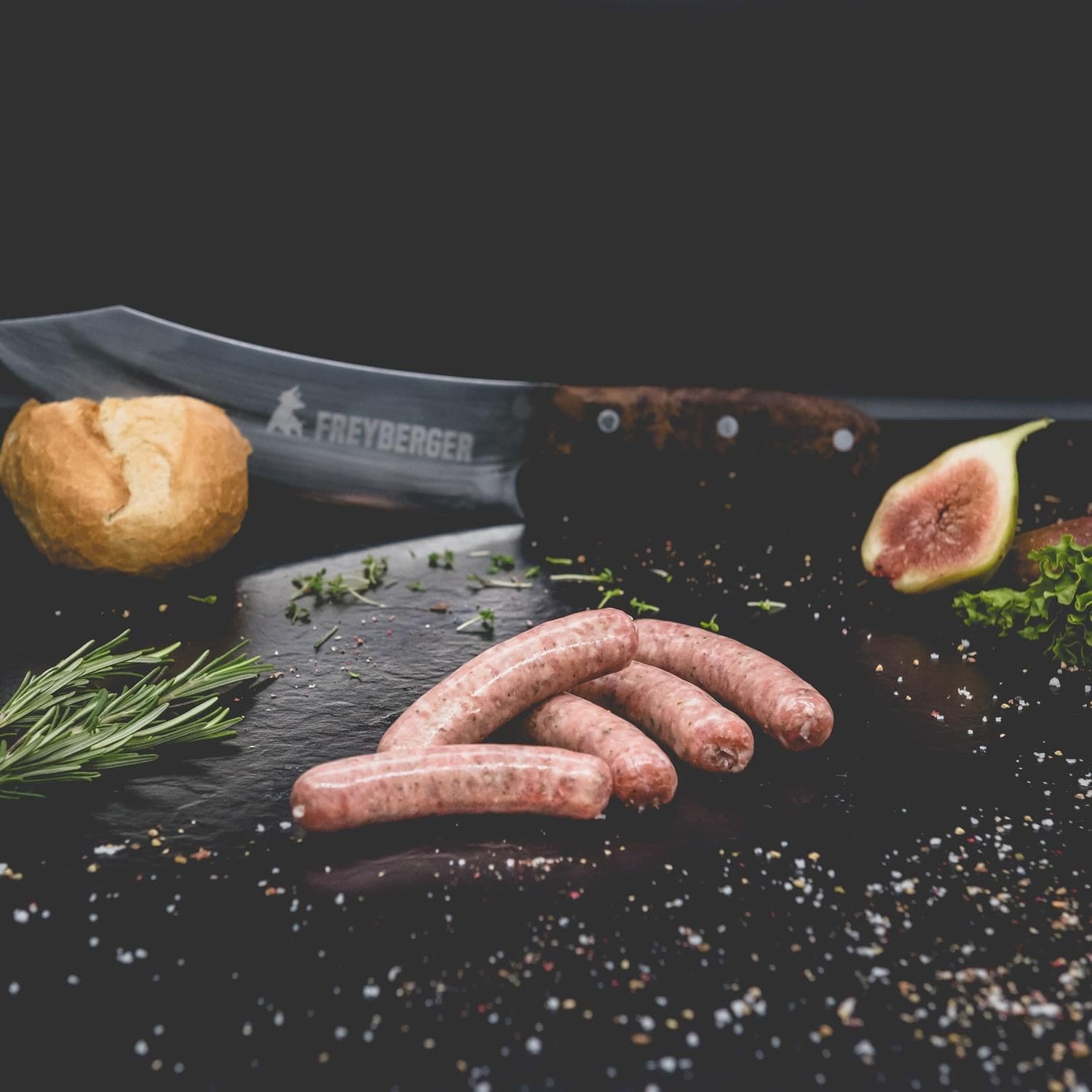
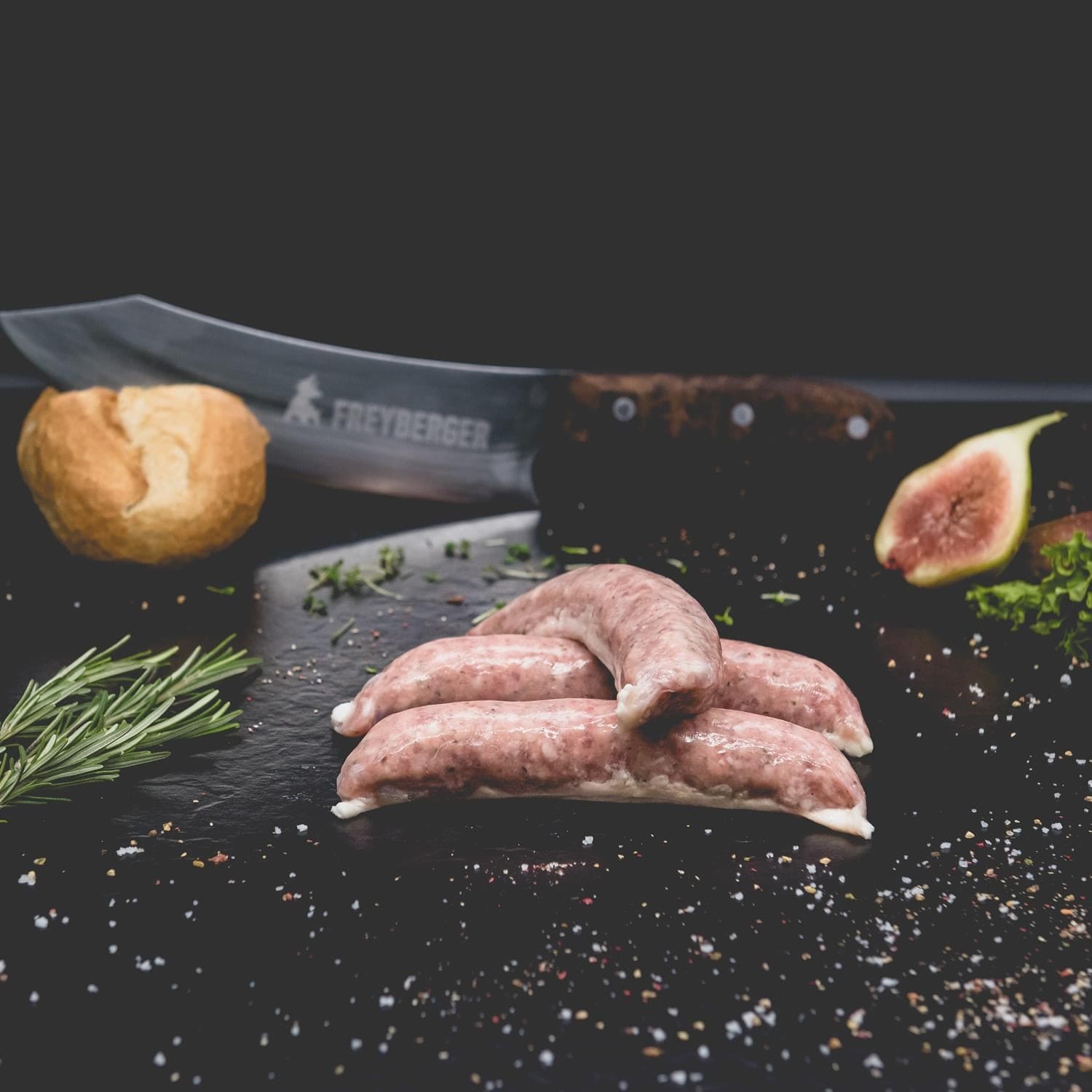
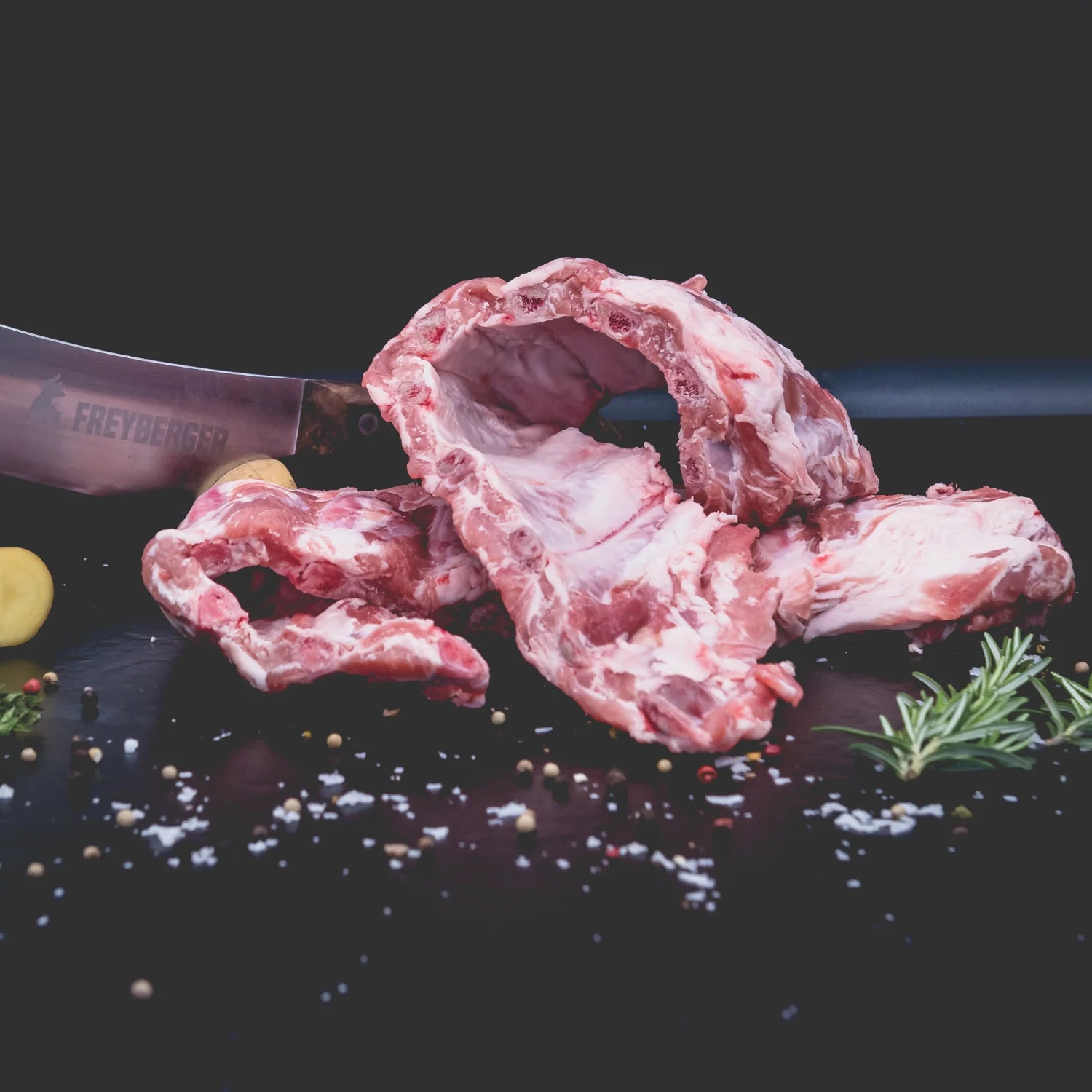
The bacon, for example, can now be used very well for preparing rendered fat. We make sausage products from fatty sections. Lean sections, however, can be excellently used for minced meat. The bones can now be freed from meat residues and then used very well for a delicious pork sauce. So, a roast or sauce base. We also have a video here for you on that.
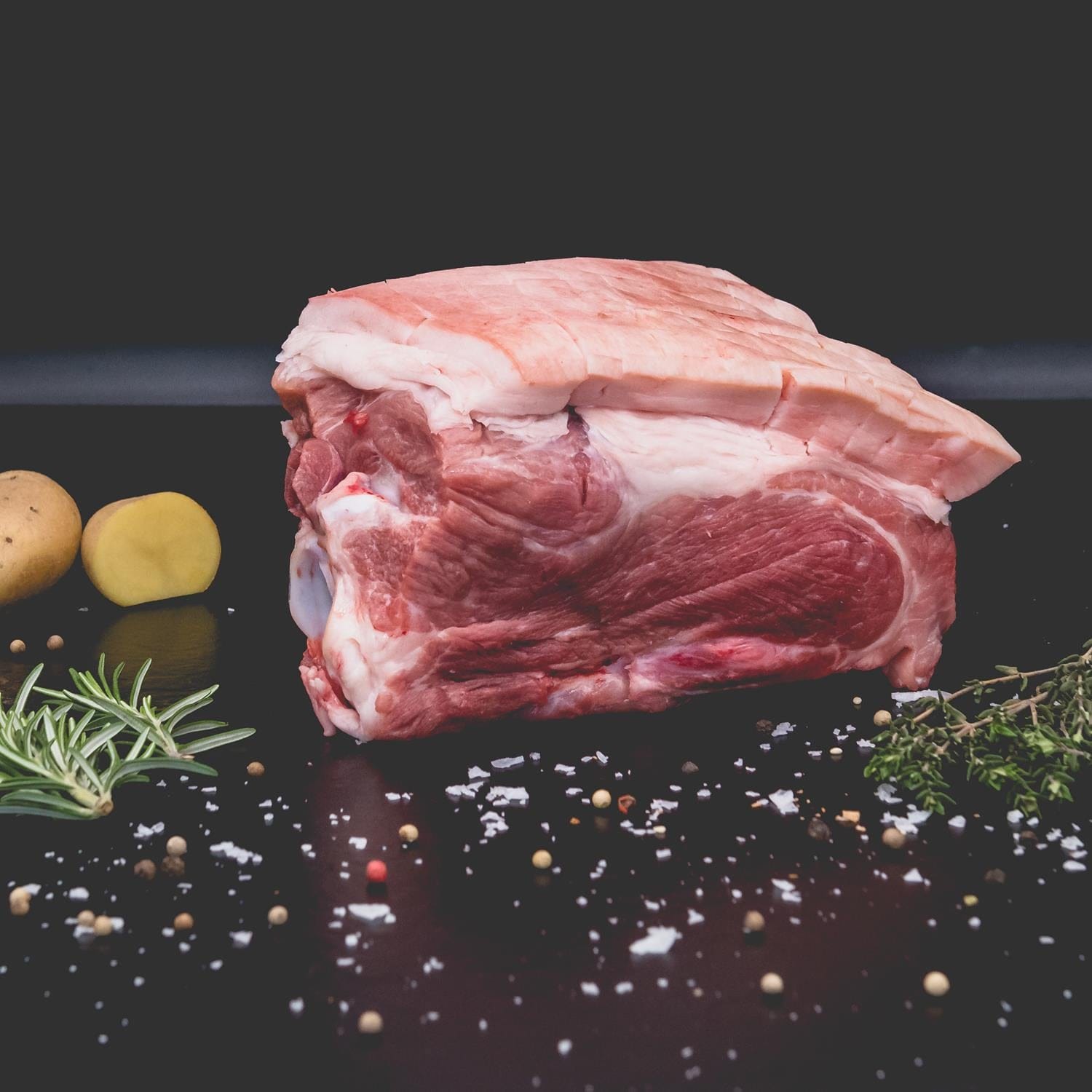
But let's go back to our pork neck. This is what our meat looks like fully deboned and cut. The pork neck has a versatile usability. Due to its intense flavor and tenderness, it is ideal for grilling, roasting, or braising. But it can also be used excellently to make pulled pork.
But important: Always pay attention to where you buy your pork neck and from what husbandry it comes. For pork, we rely on active barn husbandry. For this, we visited our farmer Michael Schneider. He told us everything about pig farming, and we also compared how husbandry forms are defined and what they actually mean for you as a consumer. You can find the video here.

Now we're going to cut our pork neck into two pieces. One we'll use for preparing as a whole roast, and from the other, we'll cut our steaks. Be sure to use a sharp knife for this. This prevents damage to the meat structure and also significantly reduces the risk of injury.
Ideally, the steaks should be between 1 and 2 cm thick. If they are too thin, errors can quickly occur during cooking, and the meat will cook through too quickly. Therefore, it is better to use slightly thicker pieces, as this makes it easier.
Grilling whole pork neck
Our neck, which we are preparing as a whole, can be left as it is. We don't need to do anything else here.
For our rolled roast, however, one important step is still missing. More on that later. First, we rub our pork neck. For this, we use our Basic Rub. This is a sugar-free spice blend that is excellent for any piece of meat. So we apply our Basic Rub and gently massage the spice into the pork neck.

At this point, we can highly recommend our Basic Rub to anyone who wants to avoid sugar in their spice blends and also doesn't want to bother with creating a balanced mixture themselves. Plus, it tastes excellent and gives the meat that certain extra touch.
We place our pork neck on our Monolith grill. We cook the meat in the indirect zone. We need a temperature of about 170 to 180 °C on the grill, and our approximately 1.2 kg piece of meat now needs to cook for about 2 hours. By the way, this will feed up to four people.
Grilling pork neck - rolled roast
Now let's turn our attention to the rolled roast. For this, we first score our other piece of pork neck and then unfold the meat. After that, we add some sausage meat and gently spread the mixture onto our rolled roast. For our 1.5 kg piece, we need about 500g of sausage meat. That's enough for 4 to 6 people. But more is always an option.

Next, we add crispy fried onions. These provide a great umami and a pleasant mouthfeel due to the slight crunch they create. And, of course, our Basic Rub cannot be missing now. Now we roll our meat. We proceed slowly so that we don't lose any of the filling.
However, to prepare the rolled roast, we still need to secure it. We do this with food-grade twine. We tie our meat firmly with the twine. The fixation is extremely important here. However, we make sure not to tie the meat too tightly. If you need a detailed tutorial for tying, we have prepared a video here for you.
Finally, our Basic Rub is used again. We apply the spice mixture externally on all sides and gently massage it in. Now we need our rotisserie spit. We want to prepare the rolled roast on the rotisserie. So we now skewer our rolled roast and secure it from both sides so that none of the filling can escape.

We now place the spit horizontally on the grill and hook it into the device. With the help of the back burner, our pork neck will now cook for two hours at 180 to 200 °C.
Grilling pork neck as steak
Now let's get to our neck steaks. For this, we first need an oil-based marinade. Possible ingredients generally include herbs, olive oil, chili, lemon or lime, as well as garlic or onions, and of course salt.

Instead of onions, we use shallots. They have a more intense flavor and, in our opinion, are better suited than conventional onions for a delicious marinade. We peel the shallots and cut them into fine rings. We cut the chili similarly. From the lemon, we use the zest.
So we peel off a bit and cut it into fine strips. We finely chop the herbs - in our case, thyme and rosemary. We do something similar with the garlic. We chop it into fine cubes and then mix the garlic with our salt. Once we have put everything into our bowl, we pour olive oil over the ingredients and mix everything together.
We now dip our steaks into the marinade. We make sure that the steaks are well covered with the liquid on all sides. The oil in the marinade breaks down the protein structure of our pork neck steaks, making them even more tender. Afterwards, we put our steaks in a container, close it, and leave everything in the refrigerator overnight.

We take our pork neck steaks out of the refrigerator and first remove the marinade. Don't worry. The marinade has already soaked into the meat, and the flavor has already developed. However, we must remove it from our steaks because otherwise the marinade can ignite on the grill and burn our meat.
We prepare our steaks on our Mini-Monolith. This is also a charcoal grill, but you can also use a gas grill. If you want to know what the difference between the two grills is when preparing food, click on this video.
We grill our steaks on all sides until they turn a golden-brown color. In total, the steaks need about 10 to 12 minutes. However, we must keep an eye on our meat and turn it continuously.
Of course, we also don't forgo a good sear. This is easy to achieve because we have removed the marinade and the associated fat beforehand. This creates an appetizing sear instead of a flare-up.

When we poke the meat with the grilling tongs without resistance, or if we can easily separate the meat into small pieces even without a knife, they are done. We also know that our steaks are ready for consumption by the meat juices that emerge.
Grilling pork neck - the right side dish
Our other neck pieces still need a little time. And, of course, we don't want to serve the meat without side dishes. Since we have a very relaxed cooking method for the roasts, we want to apply that to the side dishes as well. That's why we're going to grill something very quick now.
First, we peel carrots and then cut them into half-sticks. Then we put a little olive oil on a plate on our grill and place our carrots on it. We now fry them on all sides until golden brown. Now we sprinkle a little sugar over the carrots and caramelize them. Finally, a little salt over them, and our side dish is ready.

Small tip: This can also be prepared very easily in a pan.
Grilling pork neck - the right core temperature
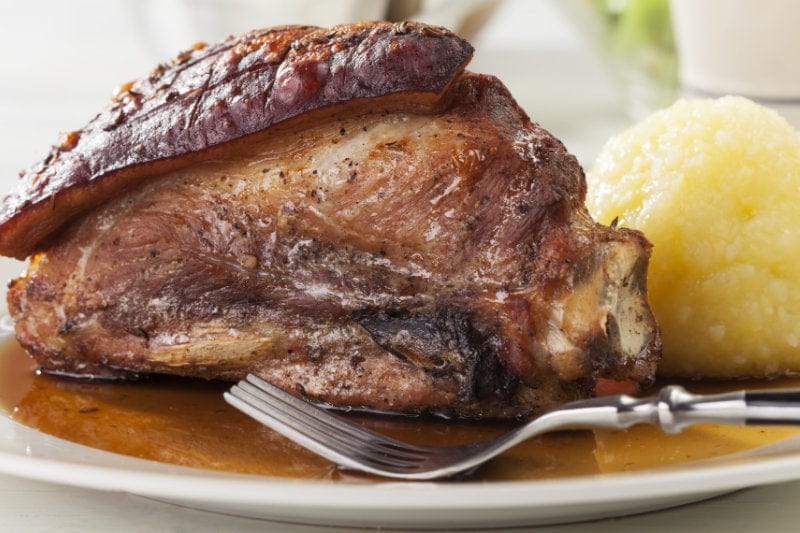
Now let's measure the core temperature of our pork neck. Once it reaches 80 °C, our pork neck is ready, and we can take it off the grill. We sharpen our knife and now cut juicy slices from our pork neck. Finally, arrange with our carrots, and we have a delicious dish, prepared in a relaxed way.
Now it's our rolled roast's turn. For our rolled roast, we also need a core temperature of 80 to 84 °C. We remove the pork neck from the spit and cut it open. Arrange it on the carrots again, sprinkle salt over it, and we have our juicy rolled roast from the pork neck from the grill.

Our conclusion
Pork neck is truly versatile. The classic steak is the best-known form. However, it's generally important where you buy the meat. Pay attention to good animal husbandry and the quality of your trusted butcher. The steaks are easy to grill, and with a good marinade of olive oil, herbs, and spices of your choice, you can't go wrong. This will make the meat more tender.
Whether you're preparing a whole pork neck or a rolled roast, the cooking method is incredibly easy. Once properly prepared, meaning rubbed or pre-filled and tied, all that's left is to wait on the grill. Quick caramelized carrots make a wonderful side dish, especially because they perfectly complement the relaxed preparation style of the roast.
So, we can only say that the pork neck is an excellent piece of meat that you can use in many ways. And, you can also easily prepare it on the grill, especially if you watch this video.
