


We Germans typically eat lamb at Easter. This is rooted in Christianity. The so-called Easter Lamb is a central Christian symbol, representing Jesus as the Lamb of God. The background: It stands for purity, peace, and life, and derives its meaning from the crucifixion and resurrection of Jesus. Therefore, we traditionally serve lamb on Easter Sunday, as that is when Lent ends in Christianity. This is also reflected in general consumption here in Germany.
In Germany, less than one kilogram of lamb meat is consumed per capita annually. Possible reasons for this are persistent myths surrounding the meat: high price, difficult preparation, and a strong taste. In this article, we debunk these prejudices and take a closer look at how the price comes about, what's behind the strong taste, and how you can prepare lamb easily and extremely deliciously.

The right farming makes all the difference
Let's start with the rearing of lambs. However, we are referring to our own lamb here. We visited the farm and saw it firsthand. If you want to see how these lambs are raised, we have a video for you here. You can find more information about our supplier here.
First, it should be mentioned that only 40% of lamb meat actually comes from Germany. The majority has to be imported.
Our lamb meat comes from Great Britain. We deliberately chose lamb meat from outside Germany because the sheep in Great Britain are kept on pasture year-round.

In Germany, this is not possible due to climatic conditions. Lambs from Germany usually have never seen a pasture before they are slaughtered. The reason: As mentioned at the beginning, Germans prefer to eat lamb at Easter. Therefore, the timing for rearing and slaughter is not optimal. However, this does not align with our company philosophy, as we prefer pasture farming. Why this type of farming is not optimal for pigs can be seen in this video.
Slaughter is also an important point. Since we source our lamb from a collective of various small sheep farmers, they are also close to the slaughterhouses, which ensures short transport routes. This is important because the animals can thus be slaughtered stress-free. Stress directly affects the taste of the lamb meat, and the lamb acquires the strong taste mentioned at the beginning. Therefore, good husbandry and stress-free slaughter are so important, not to mention the ethical aspect.
However, there's another special feature with our British lamb. Our meat is halal-certified. But importantly: halal-certified has nothing to do with ritual slaughter (shechita). A cleric is only present during slaughter to recite a special prayer. The slaughter is carried out according to EU guidelines, and ritual slaughter is forbidden there. We also oppose ritual slaughter, as we do not consider it humane and respectful slaughter.
But since we actually want to talk more about preparing lamb meat here, we will now explain the individual cuts.
The most popular cuts of lamb
The lamb loin is the finest cut in the entire animal. It is the back muscle meat and is very tender and mild in taste. Furthermore, it is extremely lean. It is ideal for searing or grilling. This cut is comparable to a beef fillet.

To prepare the exquisite meat, we first place the steak on the grill over high heat. We sear the first side for three to five minutes. Then we turn and rotate the meat on the grill by 90 degrees, then by 180 degrees, and finally again by 90 degrees. This process takes one to two minutes each time, and the cut is ready as soon as it reaches a core temperature of 58 to 60° Celsius.
Another popular cut is the rack. This can be easily prepared as a pot roast. We also have a short video on this, which you can find here. In just one minute, you'll learn how to cook a delicious rack of lamb.

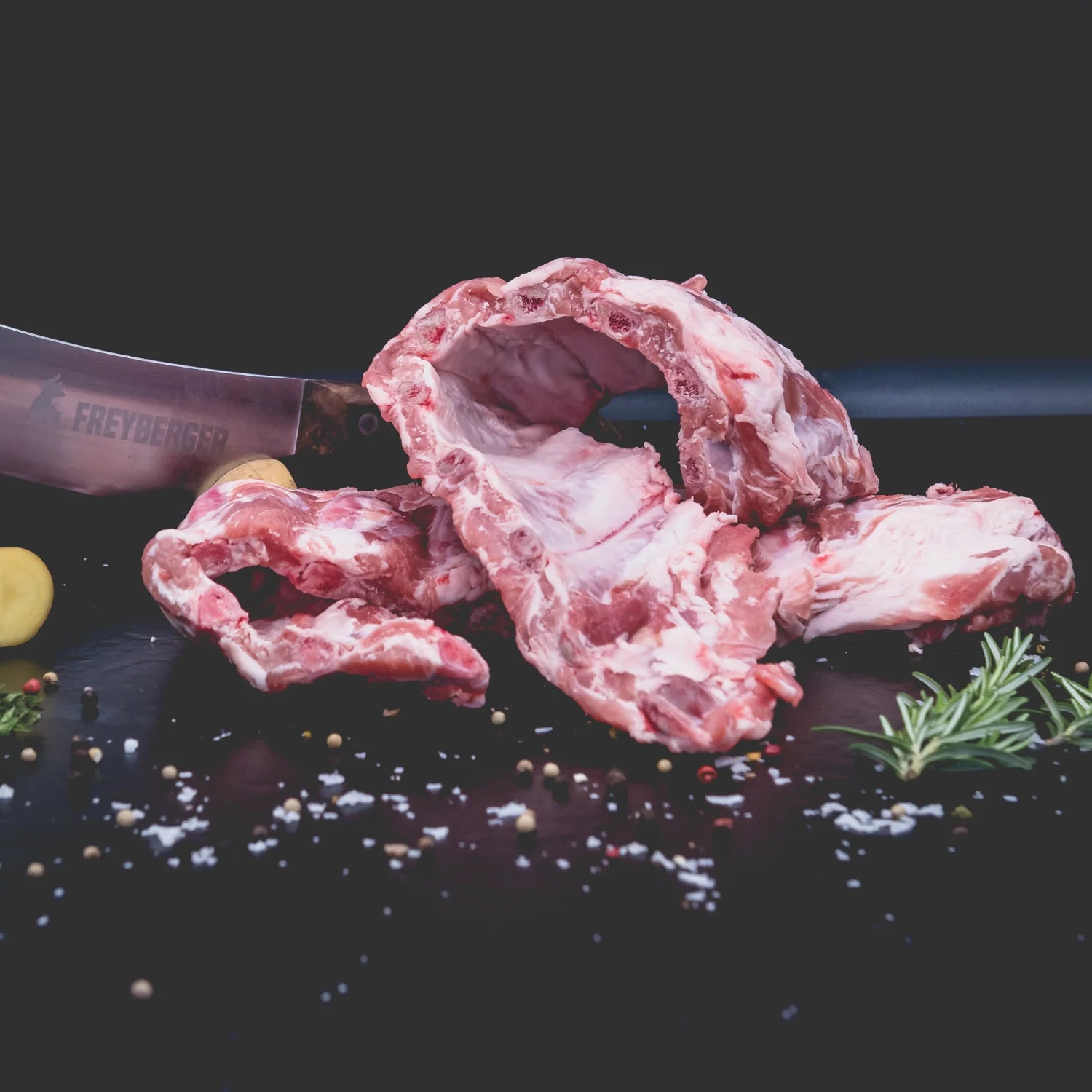
But there's another special feature of the rack: the lamb rack can also be divided into chops. Lamb chops are also among the more popular cuts. And directly on the rack are the lamb belly ribs.
These can be perfectly separated from the rack and processed as individual cuts. Namely, into an extremely delicious rib sandwich. Not very common in Germany, and therefore a very special recommendation from us. There's also a short video on this here.
Additionally, we have a video here for preparing lamb chops.
The lamb roast - especially popular at Easter
But now let's turn to the famous Easter roast.
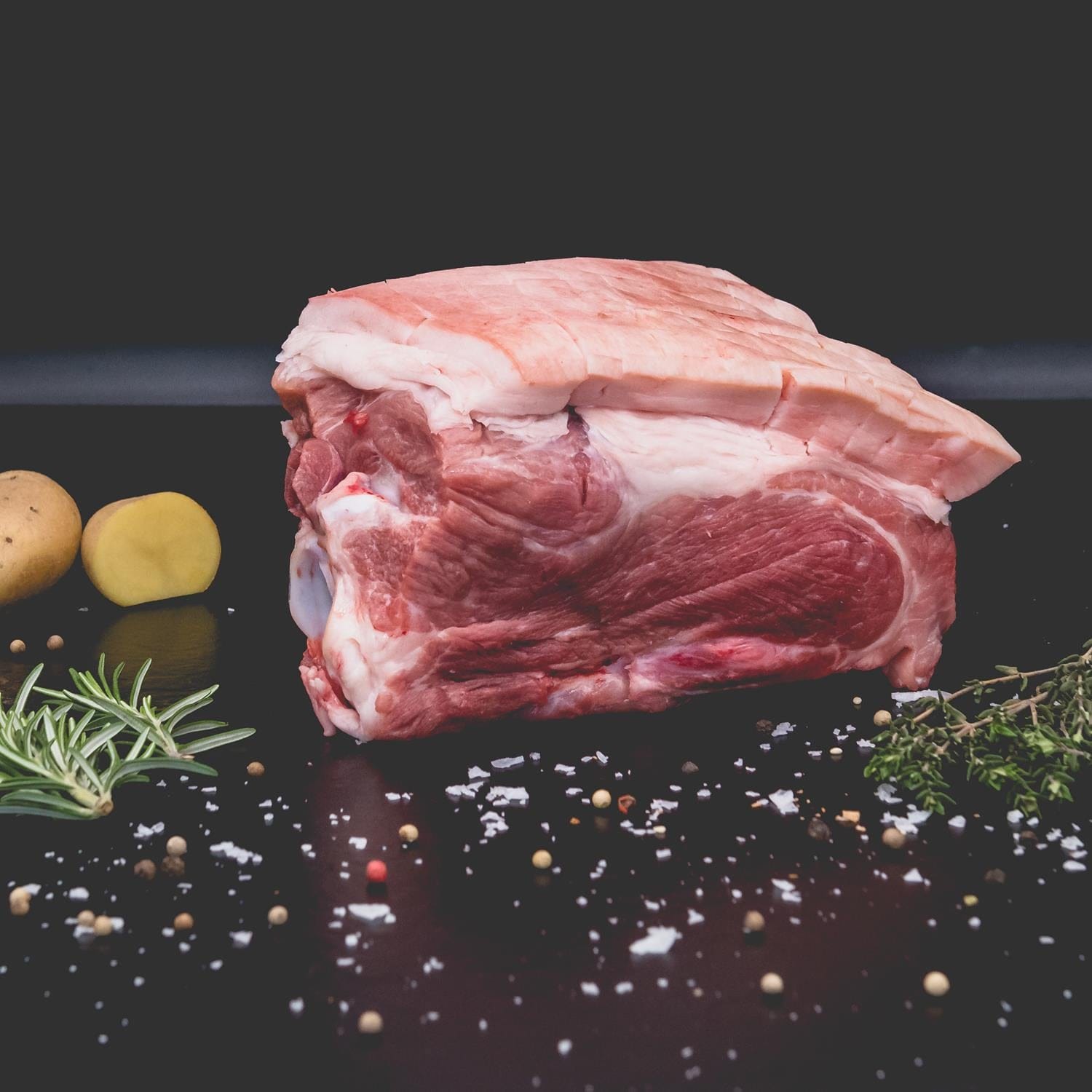
Two cuts are suitable here: shoulder and leg. However, we advise against the shoulder. This is much better suited for a tasty ragout or goulash. You can find a short video on this here.
So let's turn to the leg of lamb. This can be wonderfully prepared as a simple braised dish. But we want to go a step further and now give you our absolute secret tip: lamb shanks. Lamb shanks come from the lower part of the leg and are extremely tasty.
They are particularly suitable for portioning because they are small, premium cuts. They are not particularly common, because most people usually resort to the whole leg. But if you really want to show off and bring gourmet cuisine home, then pay close attention now.
A little spoiler in advance: lamb shanks are totally easy to prepare, and the only thing you need, besides the ingredients, is time. Nothing more.
The preparation
First, we take our lamb shanks. Four pieces are enough for two to four people. Depending on whether you are conjuring up a multi-course meal. One shank weighs approximately 300g to 400g, with the meat content limited to 2/3.

We heat our roaster and first fill it with a little oil. Don't use too much. We don't want to deep-fry our shanks. If you don't have a roaster, you can also use a frying pan.
Now we place our lamb shanks in the roaster and sear them on all sides. While our meat is browning, we take an onion. We peel it and cut it into thick rings. We add the onions to our lamb shanks.
We sauté the rings with the meat. We want to get some roasted aromas on the onions. At the same time, they should already impart flavor to the lamb and provide sufficient umami.

While our onion rings and meat are browning, we take eggplants, zucchini, bell peppers, and a chili pepper. We cut everything except the chili pepper into coarse cubes. The reason for this is that we will be adding everything to the roaster shortly. So, similar to a ratatouille. We handle the chili pepper differently. We need it finely chopped. We want the spiciness to spread pleasantly. If you want it less spicy, then use only a third or less of the chili pepper.
Once our lamb shanks have a consistent browning, we remove them from the roasting pan. It is very important that they are only lightly seared, as they still need to braise for a few hours. Now we add our vegetables to our roasting pan.

We now also sauté the vegetables a little. We don't need to add any more oil. Meanwhile, we peel a few more potatoes. For our portion, we need approximately 400 g. We cut these into potato wedges and add them to the roasting pan. We briefly sauté them too, then deglaze everything with wine. If you want to avoid alcohol, you can also use beef broth, vegetable broth, or water.
Now, pureed tomatoes come into play. We fill our roaster with them. Then a little salt to taste, and if you like, you can add more spices, such as pepper, thyme, rosemary, or garlic.
Finally, we place our lamb shanks in the roaster. We make sure that they are well submerged in the liquid and covered on all sides. Then simply put the lid on and place it in the oven or on the grill for approx. 1.5 to 3 hours at 160°C. After this time, you can remove the roaster and arrange the braised lamb shanks with the vegetables on a plate. Now all that's left is to enjoy.
Here you can also find the complete instructions as a video.

The alternative to premium cuts
At the end of the article, we would like to address another important and underestimated delicacy of lamb: minced meat. Minced lamb is a cheaper alternative to otherwise expensive cuts of lamb and is very versatile. It is in no way inferior to minced beef and is also flavorful.
We'll give you a few ideas of what you can make with minced lamb. If you can only think of spaghetti or lasagna, you should really pay attention.
Lamb is particularly popular in Oriental cuisine. It's therefore not surprising that peppers stuffed with minced meat or köfte skewers are very common there. But Lahmacun or Arayes are also quick, delicious dishes that stand out for their uniqueness.

If you would like a cross between German and oriental, you should try false Ottoman hare. Our absolute favorite, however, is a high-protein meatloaf wrap without carbohydrates. You can find these and many more exciting recipe ideas on our YouTube channel.
Our conclusion
Today we learned a lot about lamb. In Germany, the demand for lamb meat is low. Nevertheless, there are not enough lamb breeders here to meet this small demand, which limits availability. This naturally affects the price, which is why lamb is more expensive than, for example, pork. Pork has a much greater demand and availability in Germany.
In Germany, sheep cannot be kept on pasture all year round. Slaughter and husbandry are essential for the taste of the lamb. Poor husbandry and stress result in a poor taste experience.
In this country, we usually eat lamb at Easter. The most popular cuts are lamb loins and chops, or the rack. When roasting, Germans usually opt for the leg. However, the cuts next to the rack and leg are much more interesting and exclusive. Ribs and shanks give the already select meat that certain extra something.
Lamb shanks are very easy to prepare, and we have simply made a gourmet dish for home. The preparation doesn't take much time, and during the braising process, you can relax and dedicate yourself to other activities. If you want to save money on lamb but still want a full flavor experience, you should definitely go for minced meat.
If you would like all this information in video form again, you can find it here.
