

Almost all methods for preserving meat originated in times when there were neither refrigerators nor freezers. People had to find other ways to manage. The range of benefits is enormous, so these methods are still used today: smoking and curing lead to interesting changes in taste. In addition, the meat takes on its characteristic red color, and canning makes the food ready for consumption.
Storing meat in airtight containers, in turn, is a relief for longer journeys. Here, too, war acted as an innovation accelerator, as the tin can was a practical invention under Napoleon. A modern airtight packaging for meat are seal bags, which can work wonders in terms of shelf life in a simple way.
Simple methods to preserve meat
First and foremost, of course, refrigerators and freezers are available for duck, goose and co. today. However, the difference between chilling and freezing is significant:
Chilling the meat
In the refrigerator, meat will last for a few days at best. Raw meat products such as minced meat, tartare, minced pork and carpaccio must be consumed within one day. Due to the greater cold, meat should preferably be stored at the bottom.
Freezing the meat
In the freezer compartment, on the other hand, raw and prepared meat in sauce can even stay fresh for a year if stored in airtight packaging.
Alternative forms of preservation
In addition to heat, moisture, humidity, light and the enzymes of protein also affect meat, which gives alternative preservation methods their effect. These have various advantages and are suitable depending on the type of meat and the desired result:
Drying the meat
Drying meat removes moisture from the meat, which attracts microorganisms and supports putrefaction processes. It has a strong influence on its shelf life and leads to a characteristic change in taste with a concentrated aroma. Examples of dried meat are beef roulades and beef jerky.
Smoking the meat
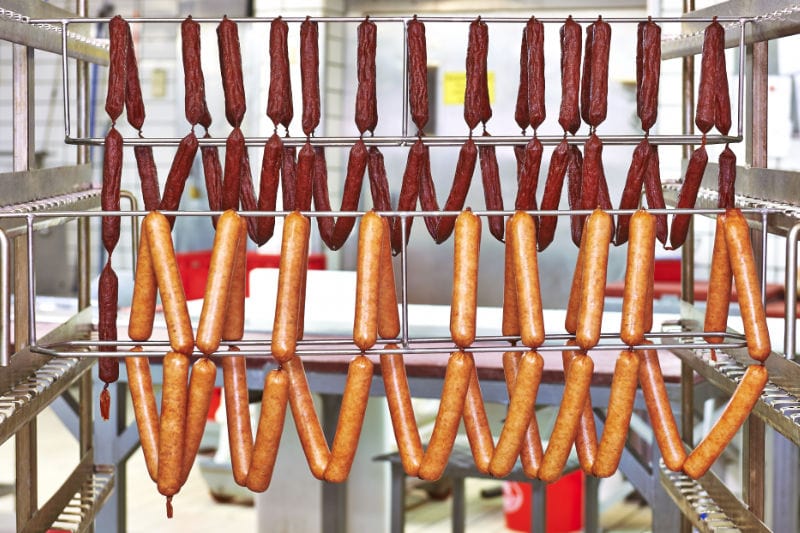
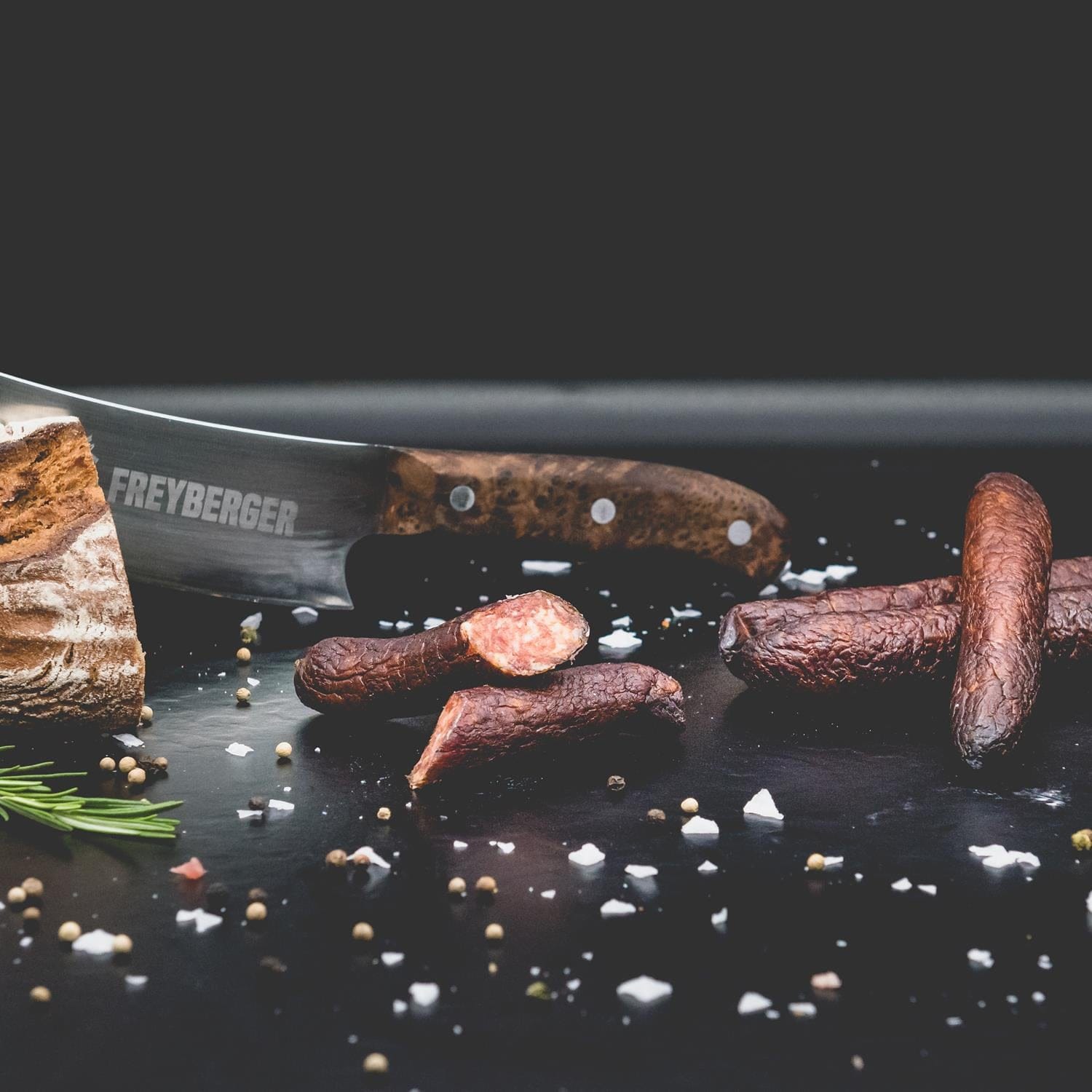
The smoke during smoking contains substances that inhibit bacterial growth. Smoked meat has a very special, smoky note. Meat can be smoked in a smokehouse, over a fire or in a smoke oven. A distinction is made between hot and cold smoking. Typical smoked meat products are Black Forest ham, Frankfurt sausages as well as bacon and smoked sausage.
Curing the meat
Curing meat also serves to dry it and has been known for over 9,000 years. Drying is achieved by placing the meat in a layer of curing salt, whereby this salt is characterized by the addition of potassium nitrite. Curing salt penetrates deep into the meat and extracts its moisture from the inside out.
Both a shelf life effect and a change in taste are to be expected with curing. Cured meat such as Kassler also has a characteristic redness. Another advantage is the possibility of adding certain spices to the salt to give the meat a special aromatic note.
Canning the meat
Canned meat is preserved by heating it in the oven and then sealing it airtight in preserving jars. Alternatively, the meat can be boiled in water for five minutes. Already existing germs are killed and the stored meat is ready for consumption. Before storage, the meat is chopped and cooked in liquid – hygiene must be observed.
Preserving meat with fat
In this preservation method from France, also known as confit, the seared or cured meat is simmered in its own fat at around 85 °C for several hours. The lard that forms after cooling then covers the meat protectively, so that hardly any air can penetrate. This method also provides an attractive aroma, and the shelf life is up to four months.
Marinating the meat
Meat is often marinated, as the sauces provide an intense inherent taste and the cook has a large selection of flavors. In terms of shelf life, marinade in combination with salt, lemon juice, vinegar and wine can extend it up to ten days, because it creates an environment on the meat surface that repels microorganisms.
Preserving meat with oil
If the meat is rubbed with oil, it is at least partially sealed airtight by the oil, which can extend the shelf life of the meat by two to three days. This effect is strongest when using olive oil on beef, which extends it to up to two weeks. Oil preservation of meat is also popular because oil, together with a little salt and spices, refines the taste of the meat.
