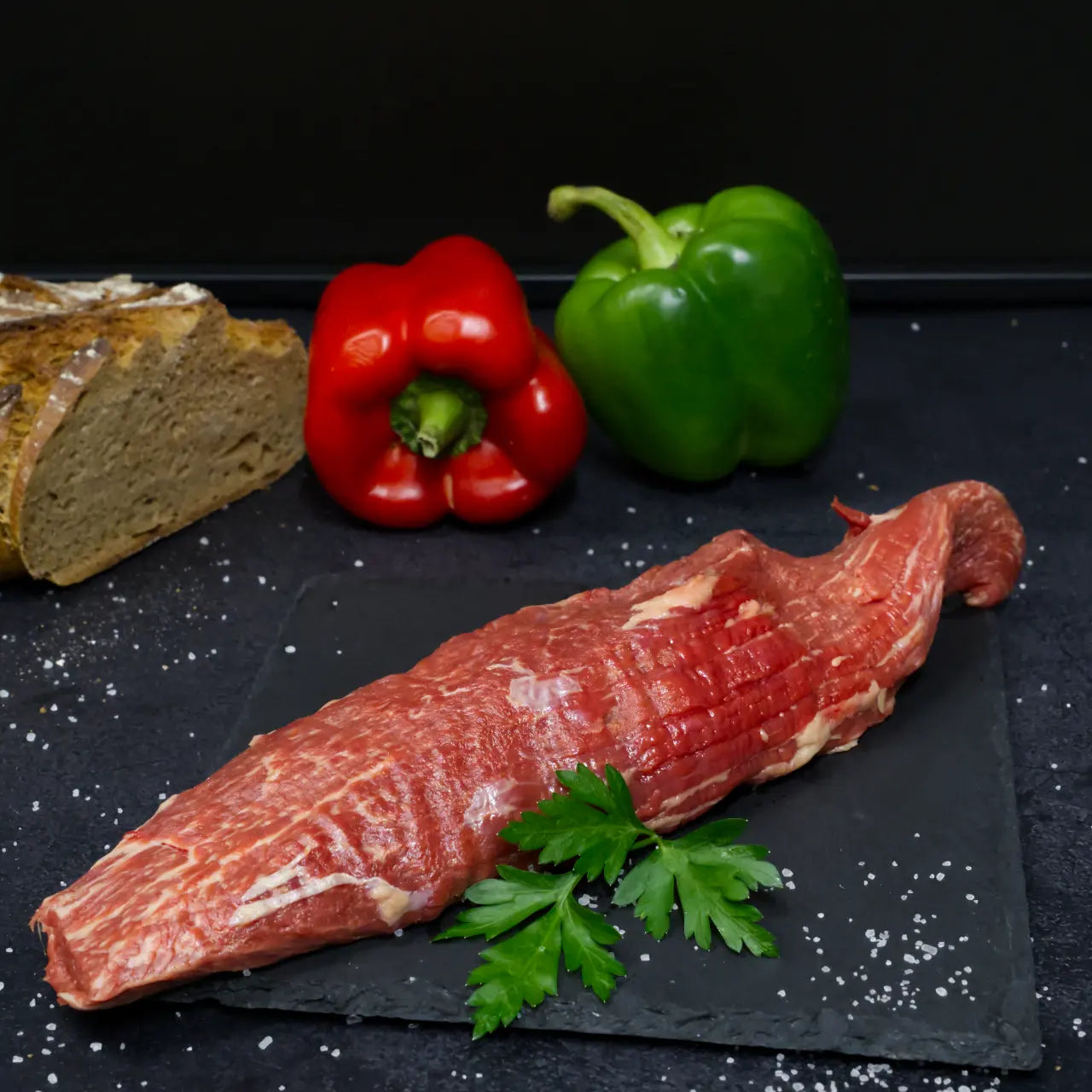
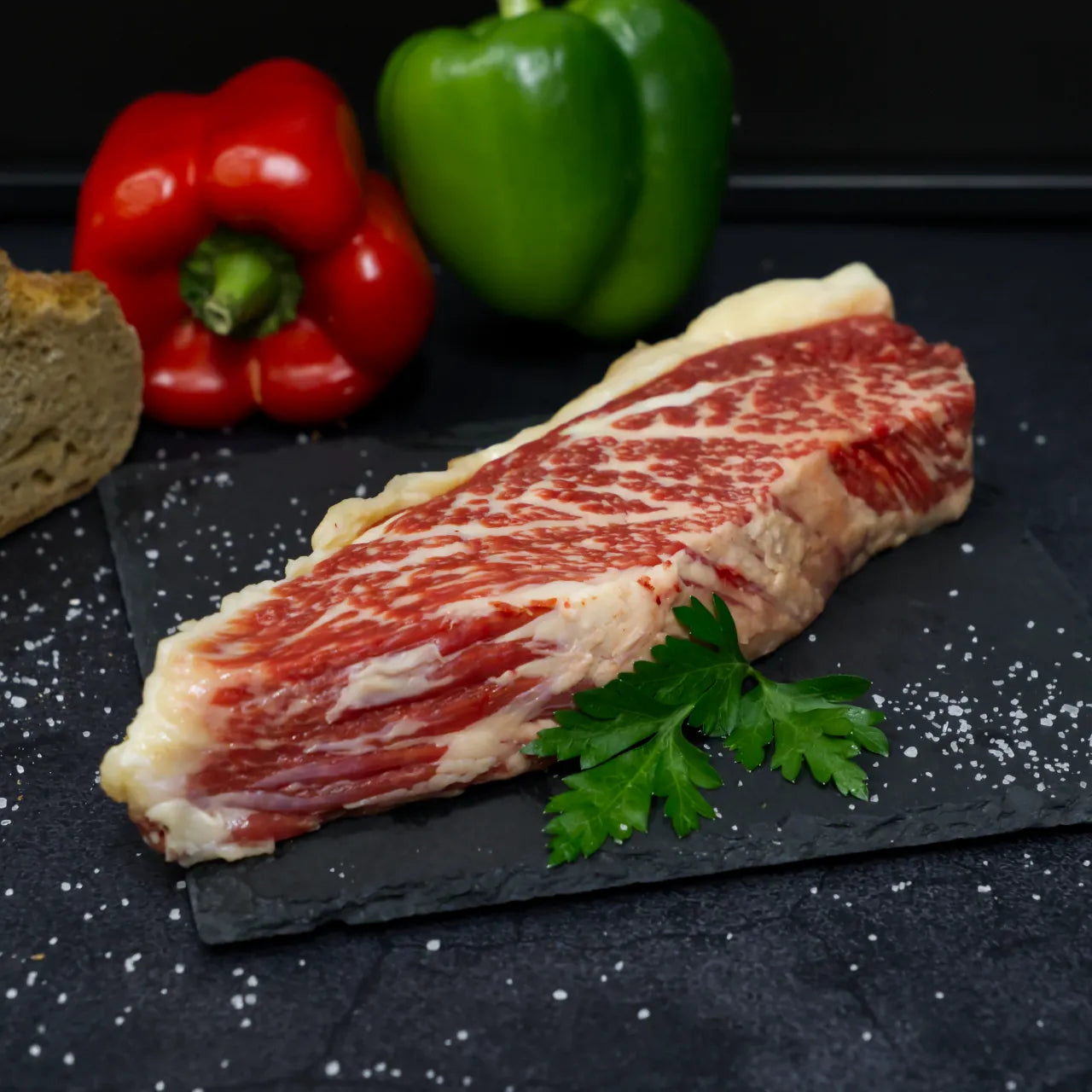
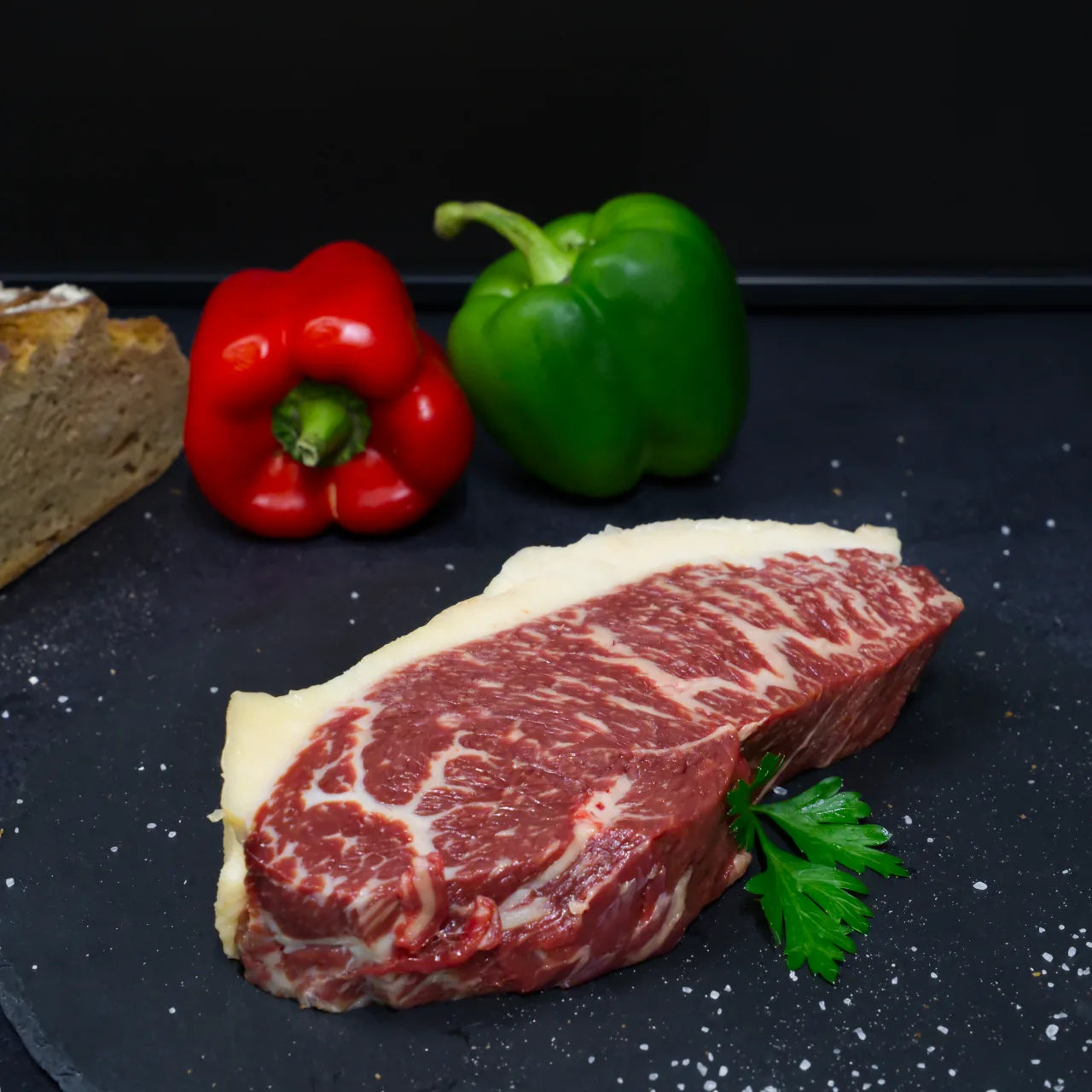
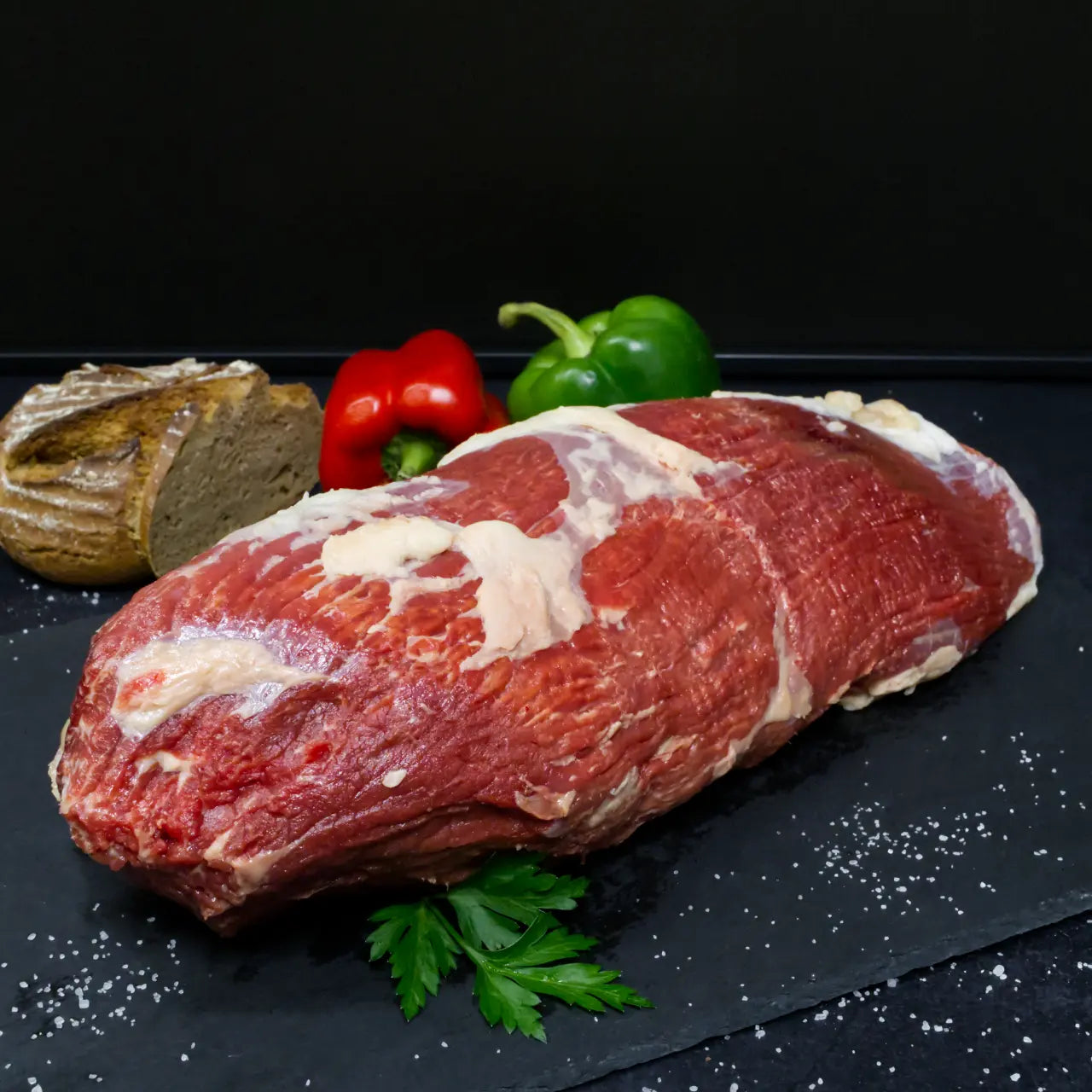
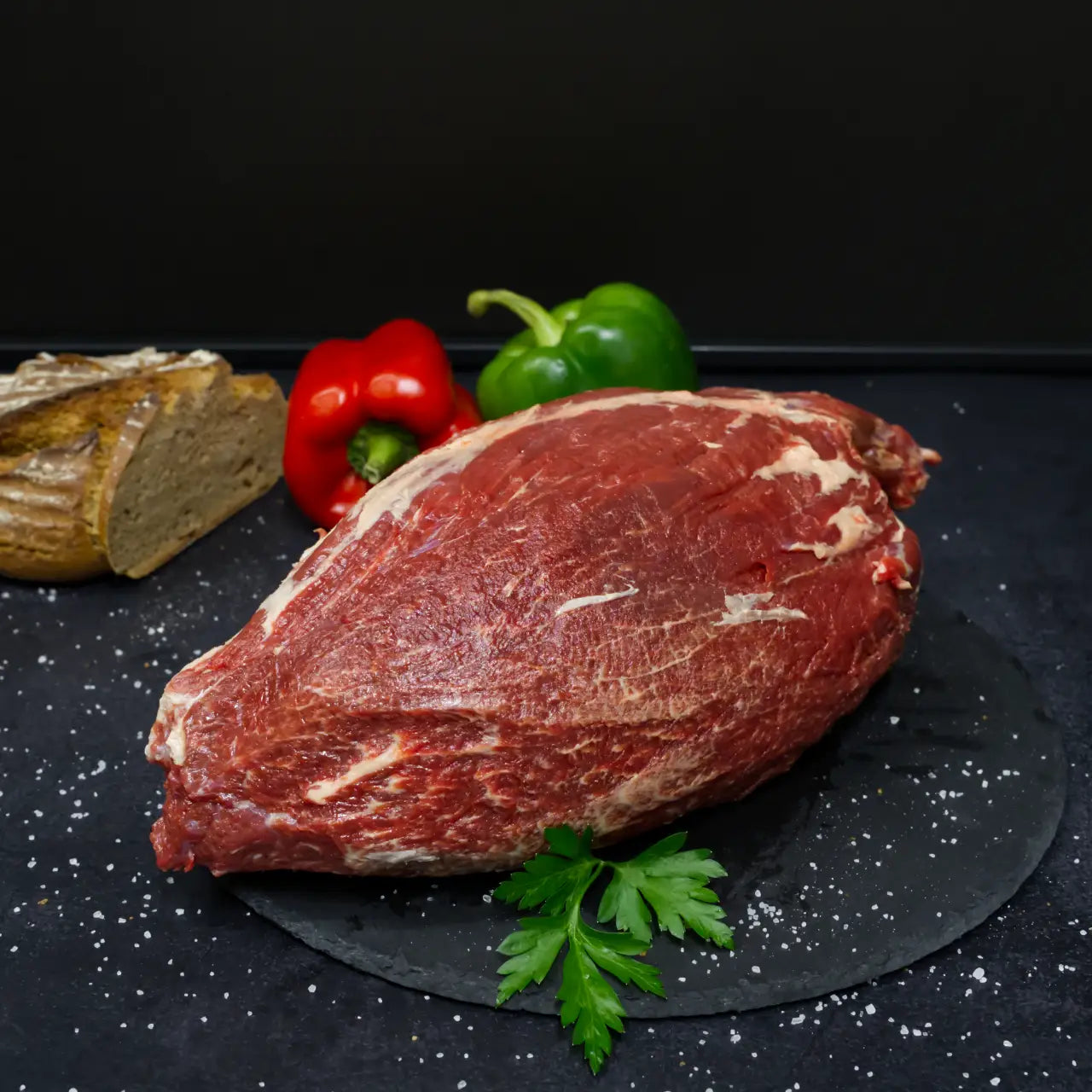
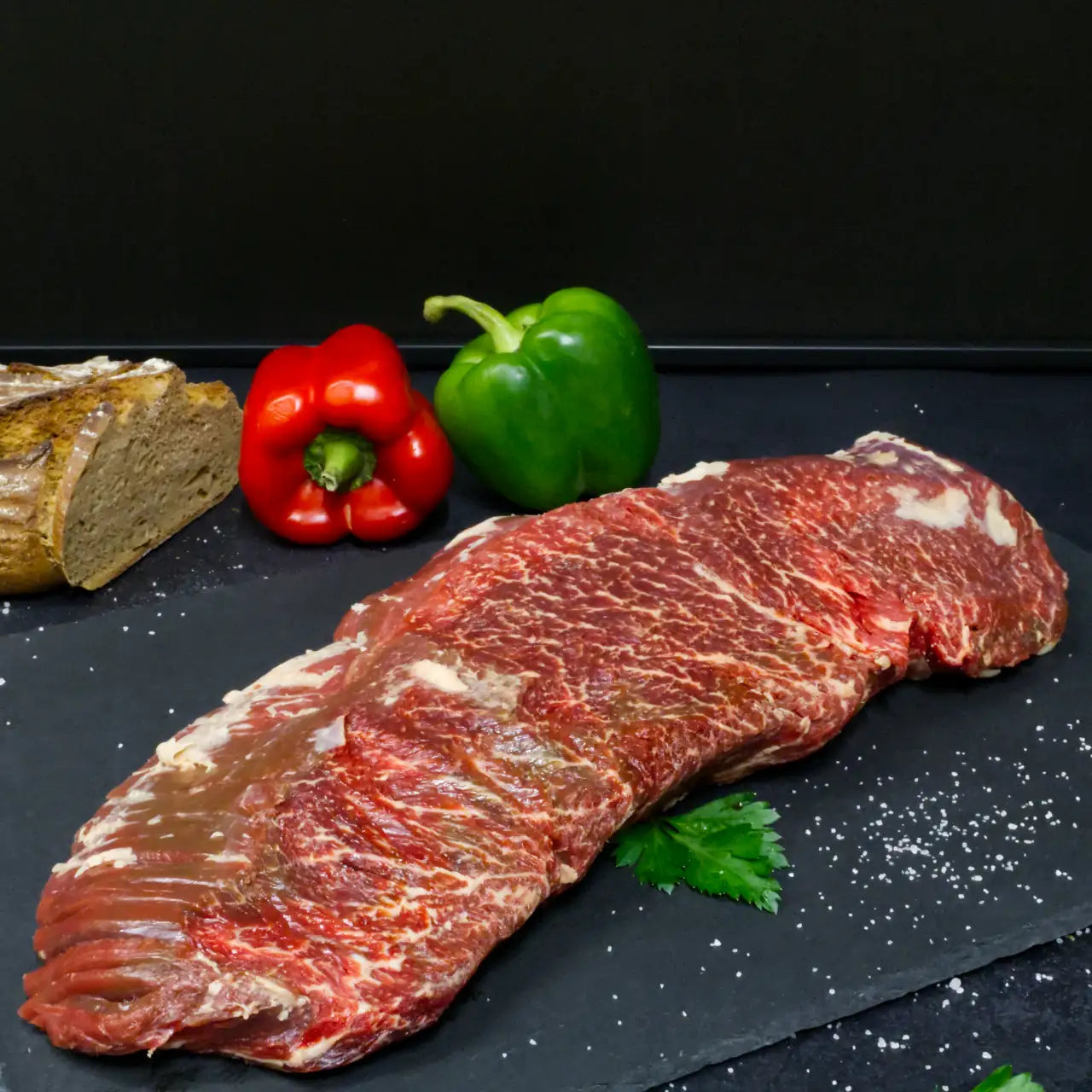
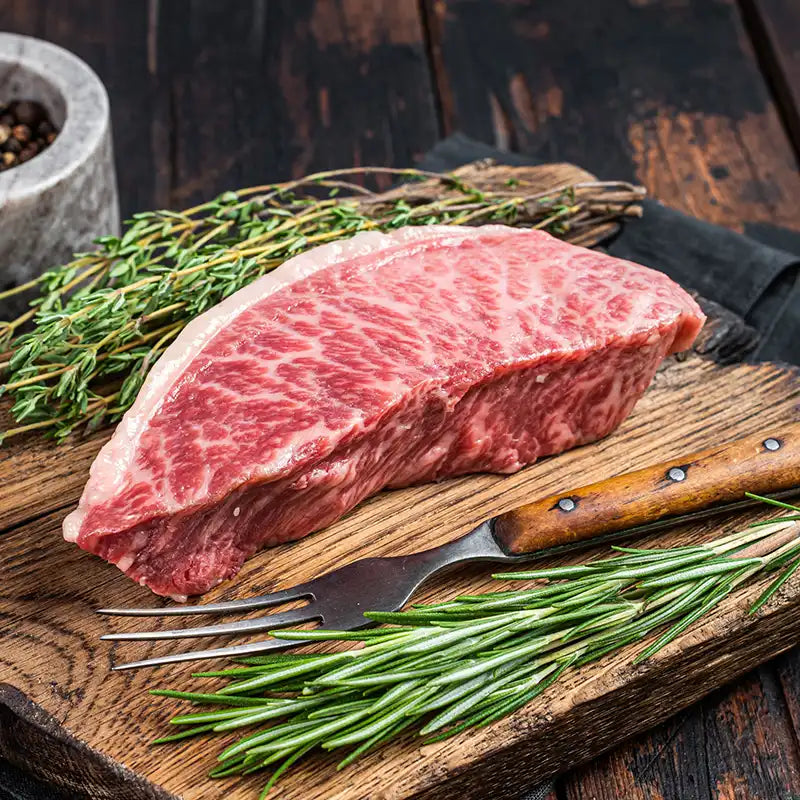
Due to its tender and marbled texture, Wagyu beef, originally from Japan, is enjoying increasing popularity among gourmets and food enthusiasts worldwide. What makes Wagyu beef so special and how is it produced? We take a look at one of the most flavorful meats in the world.
Buy Wagyu beef - Japanese beef meets German master butcher
If you're looking to buy Wagyu beef, you've come to the right place. We source our full-blood Wagyu beef directly from the award-winning Miyazaki Prefecture, known for its high marbling. You can easily order it online from our shop.
Differences between Fullblood and F1 Wagyu
The differences between Fullblood and F1 Wagyu lie primarily in their lineage. Fullblood Wagyu ("true" Wagyu) comes from purebred Japanese lines, while F1 Wagyu is a cross between a Wagyu and a foreign cattle. Fullblood Wagyu is considered premium beef due to its high and fine fat marbling and delicate flavor. However, the taste experience is remarkable with both types of Wagyu beef, as it seemingly melts, leaving a rich, buttery, umami flavor. F1 Wagyu may be rated lower due to its half-bred Wagyu and half-bred Wagyu lineage, but it is still an exquisite meat prized by gourmets. Overall, both types of Wagyu beef offer an exceptional culinary experience that is second to none.
Meat quality: tenderness, taste and marbling
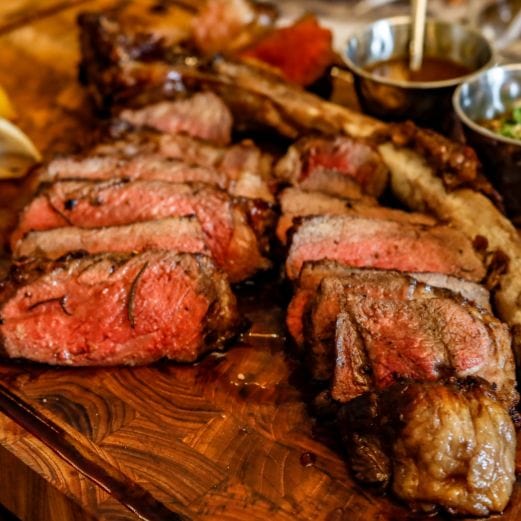
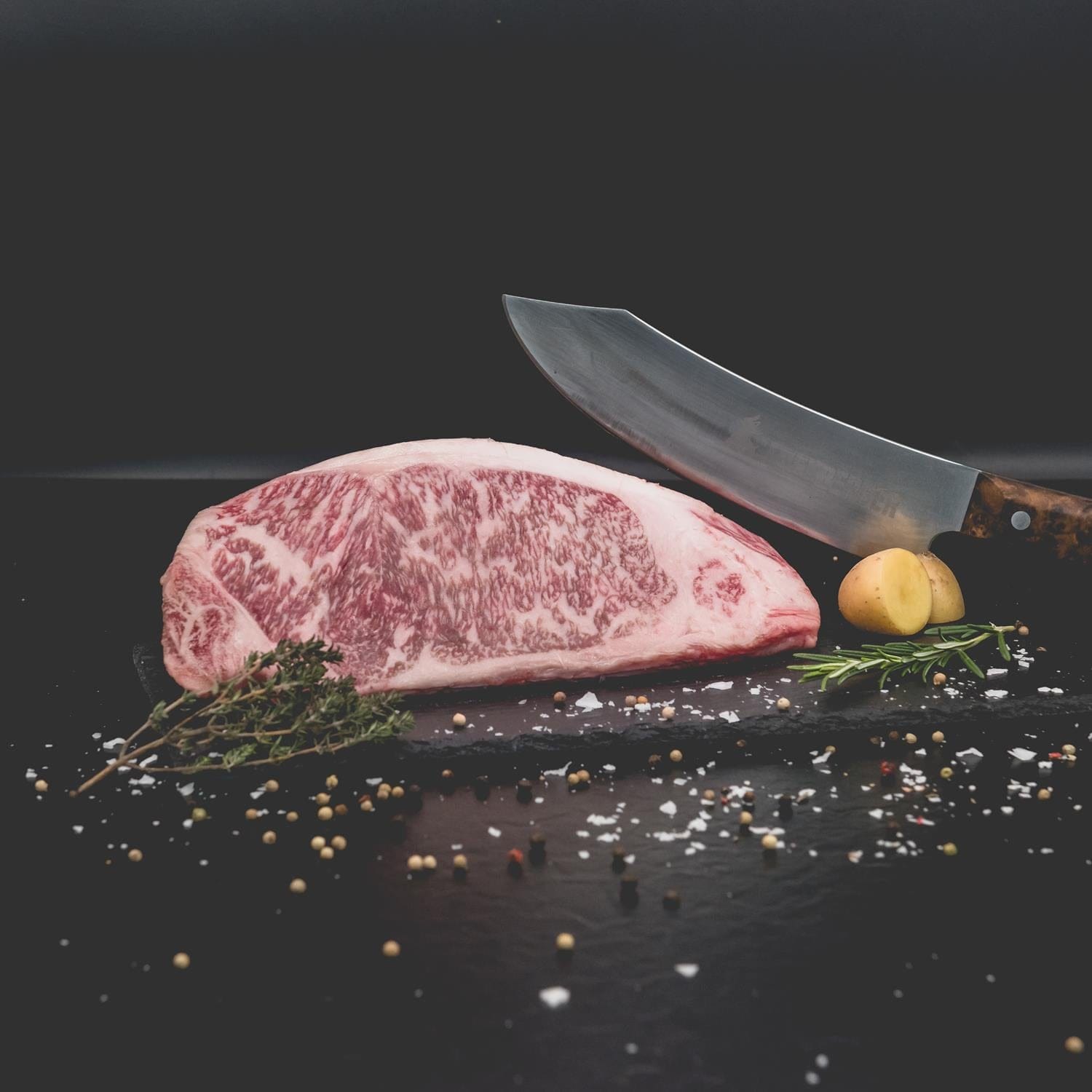
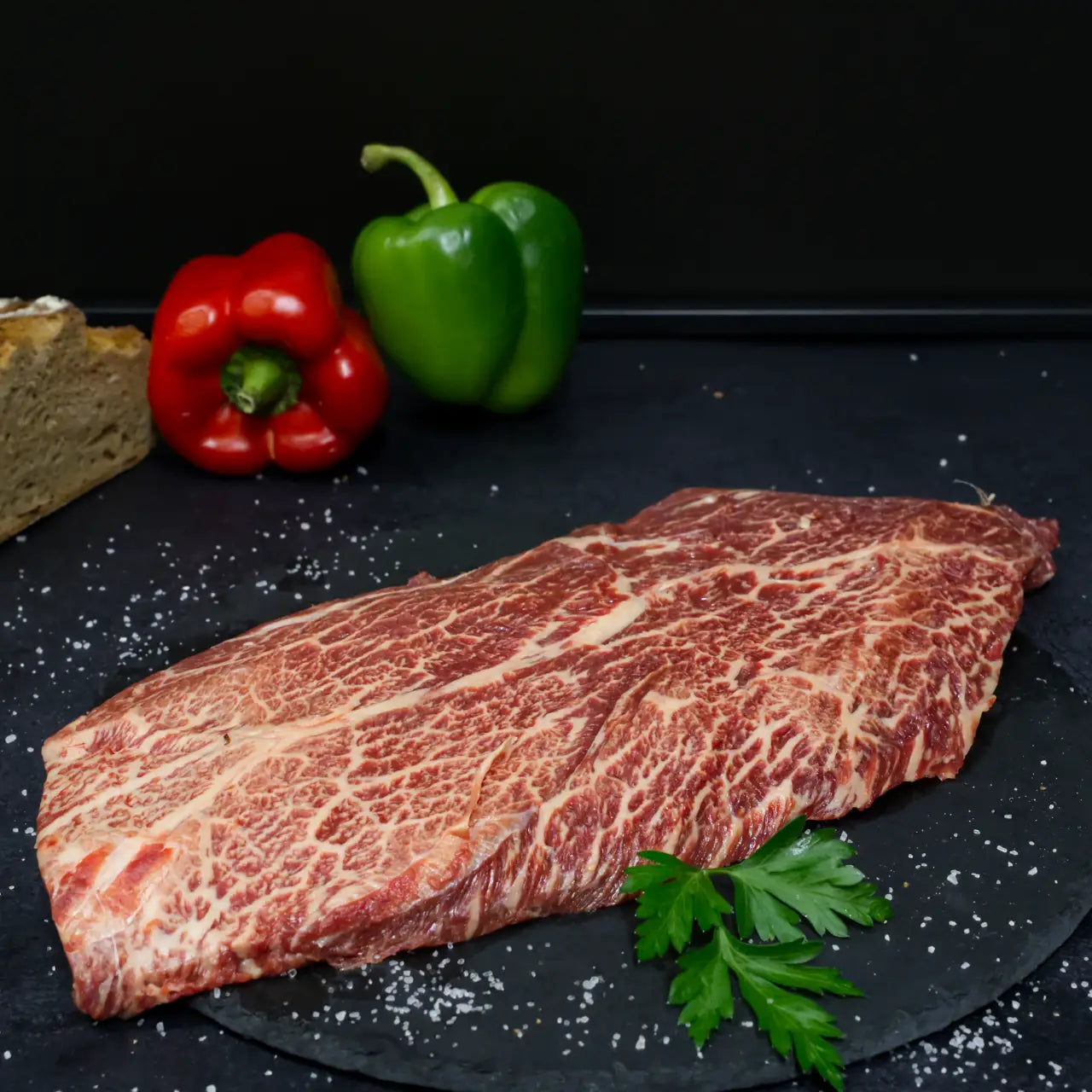
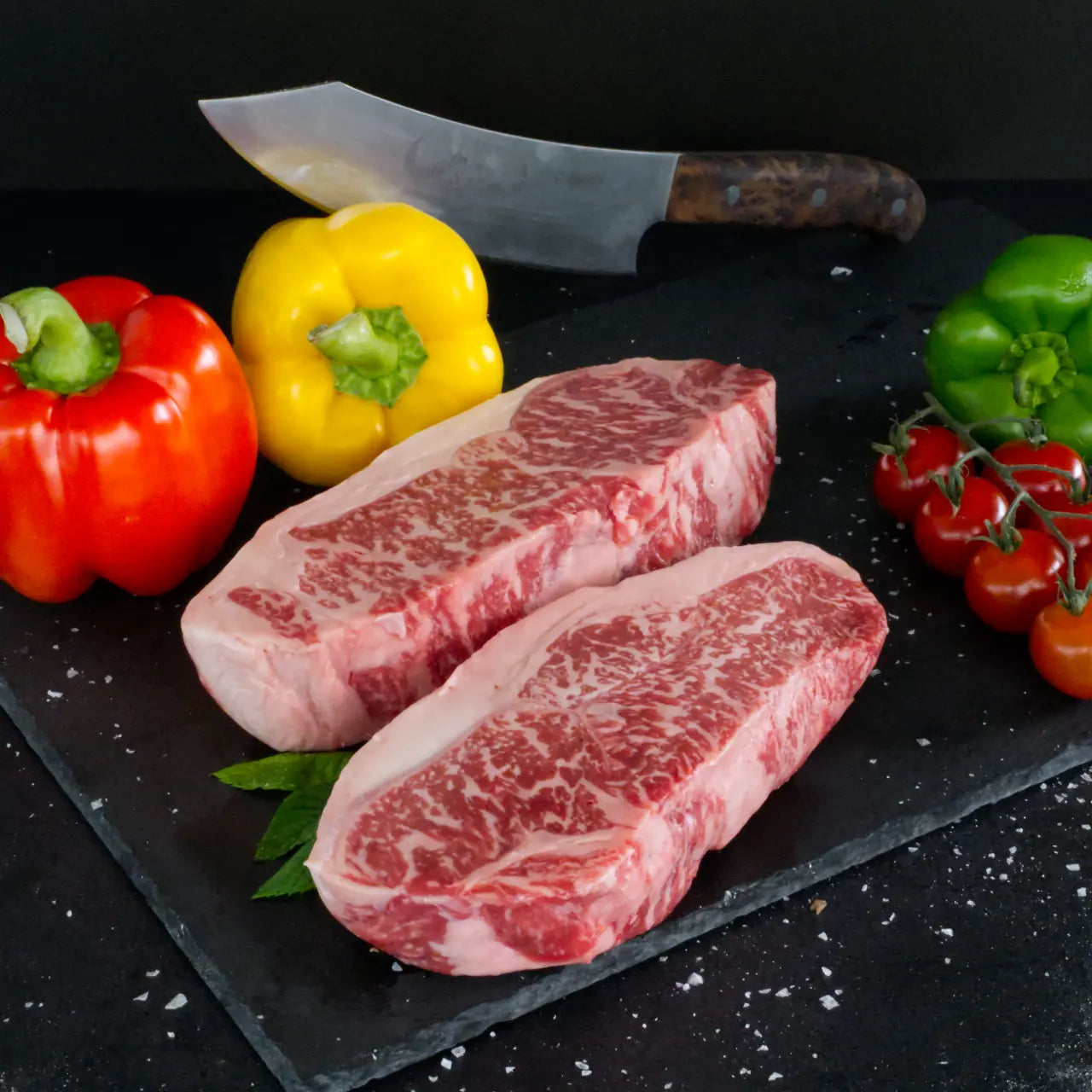
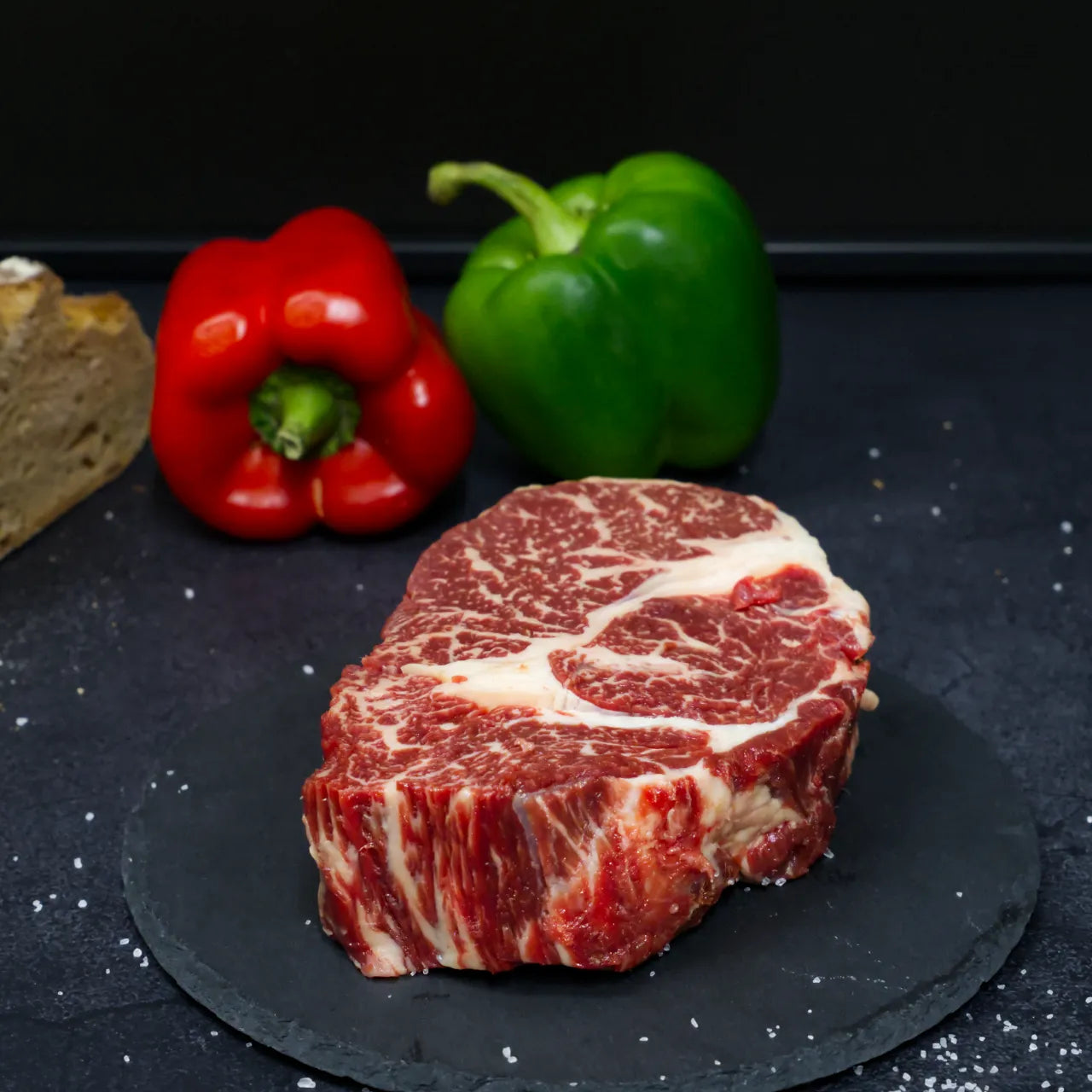
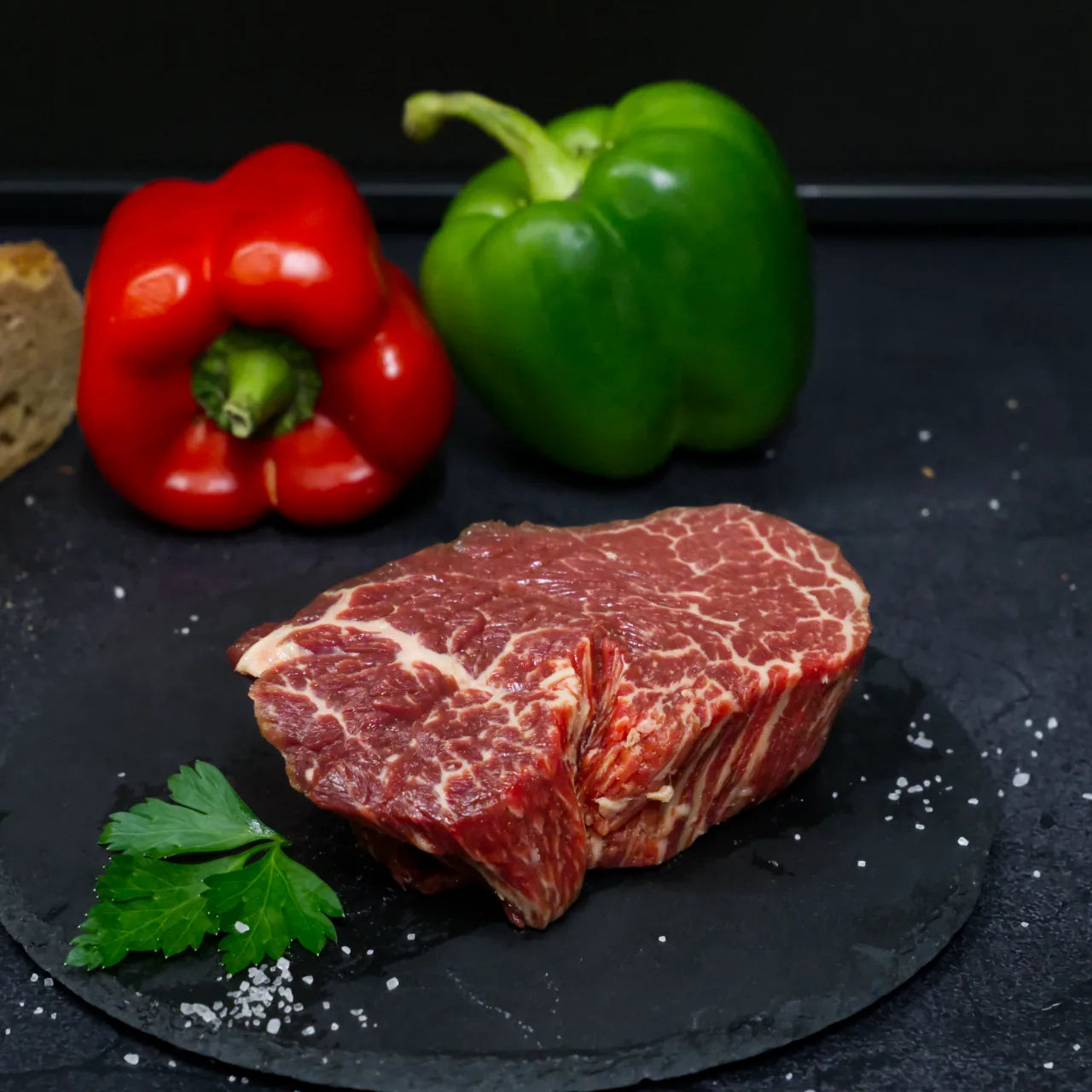
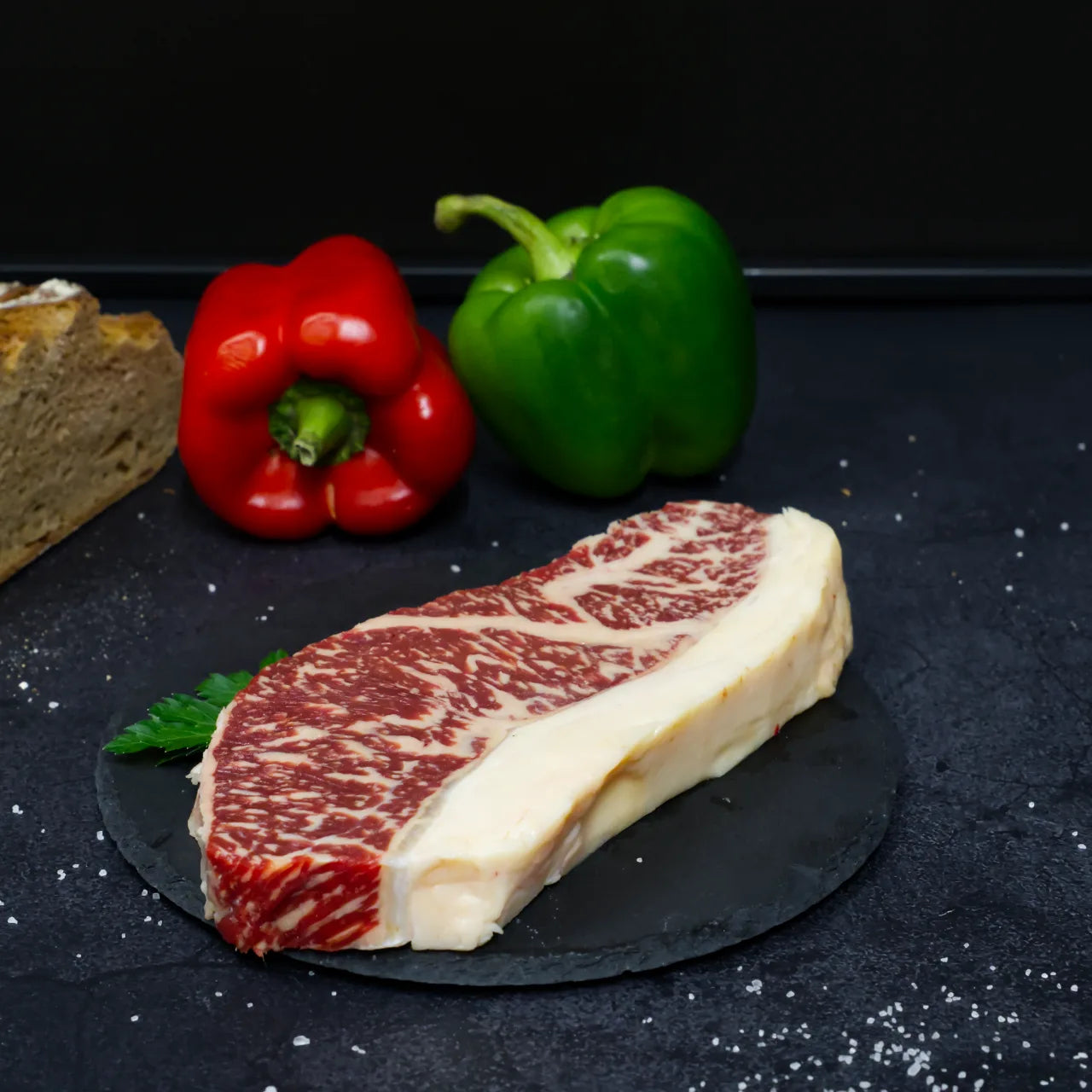
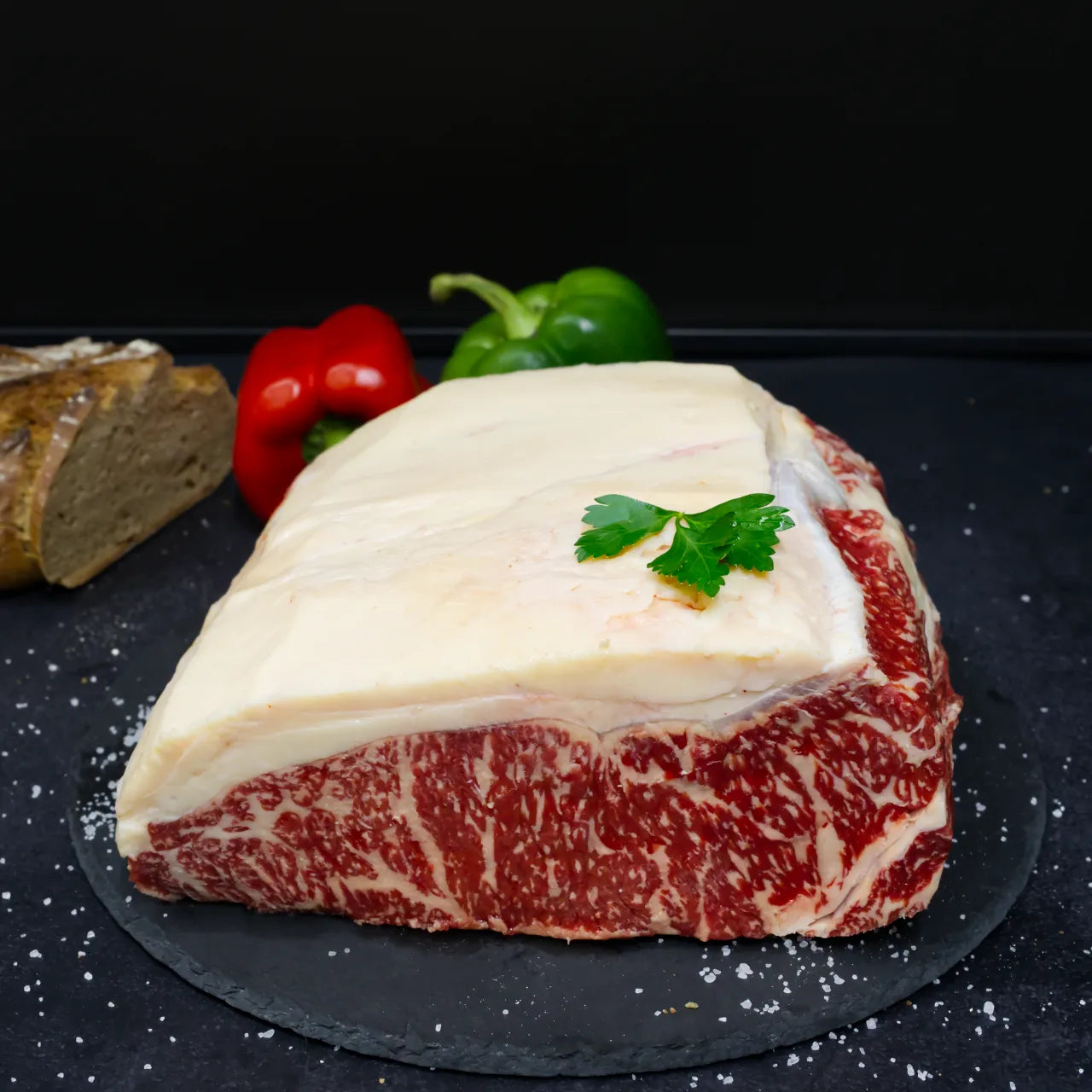
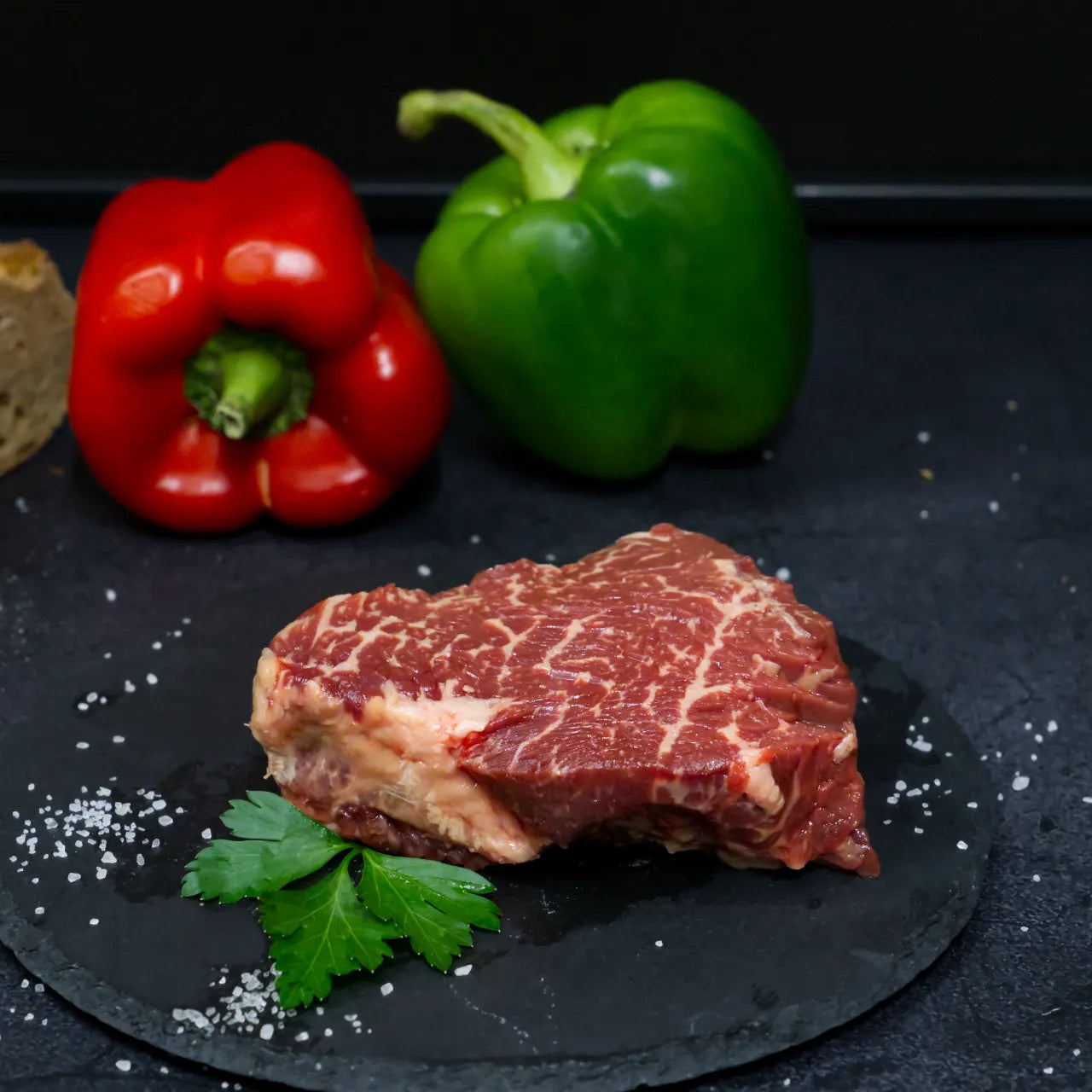
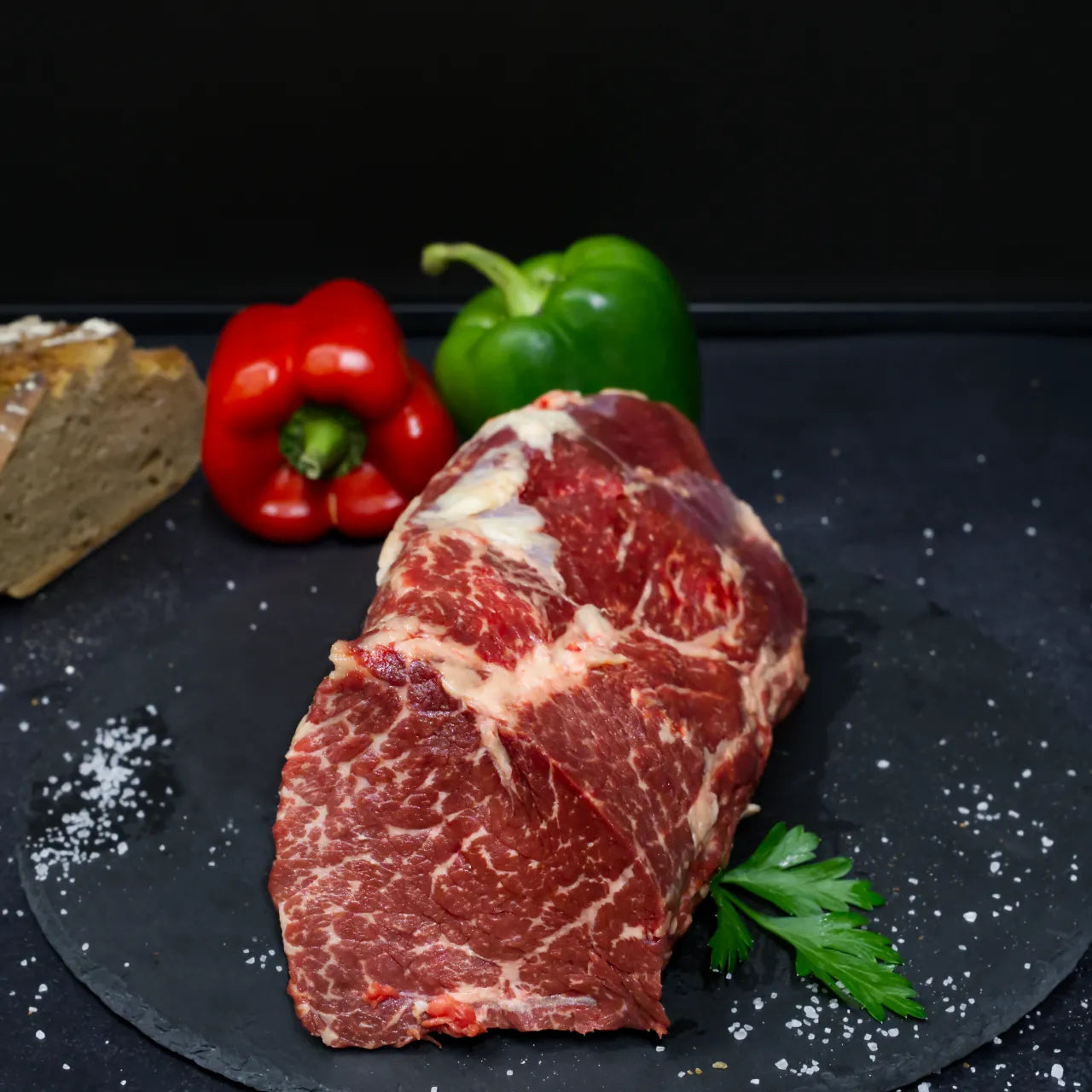
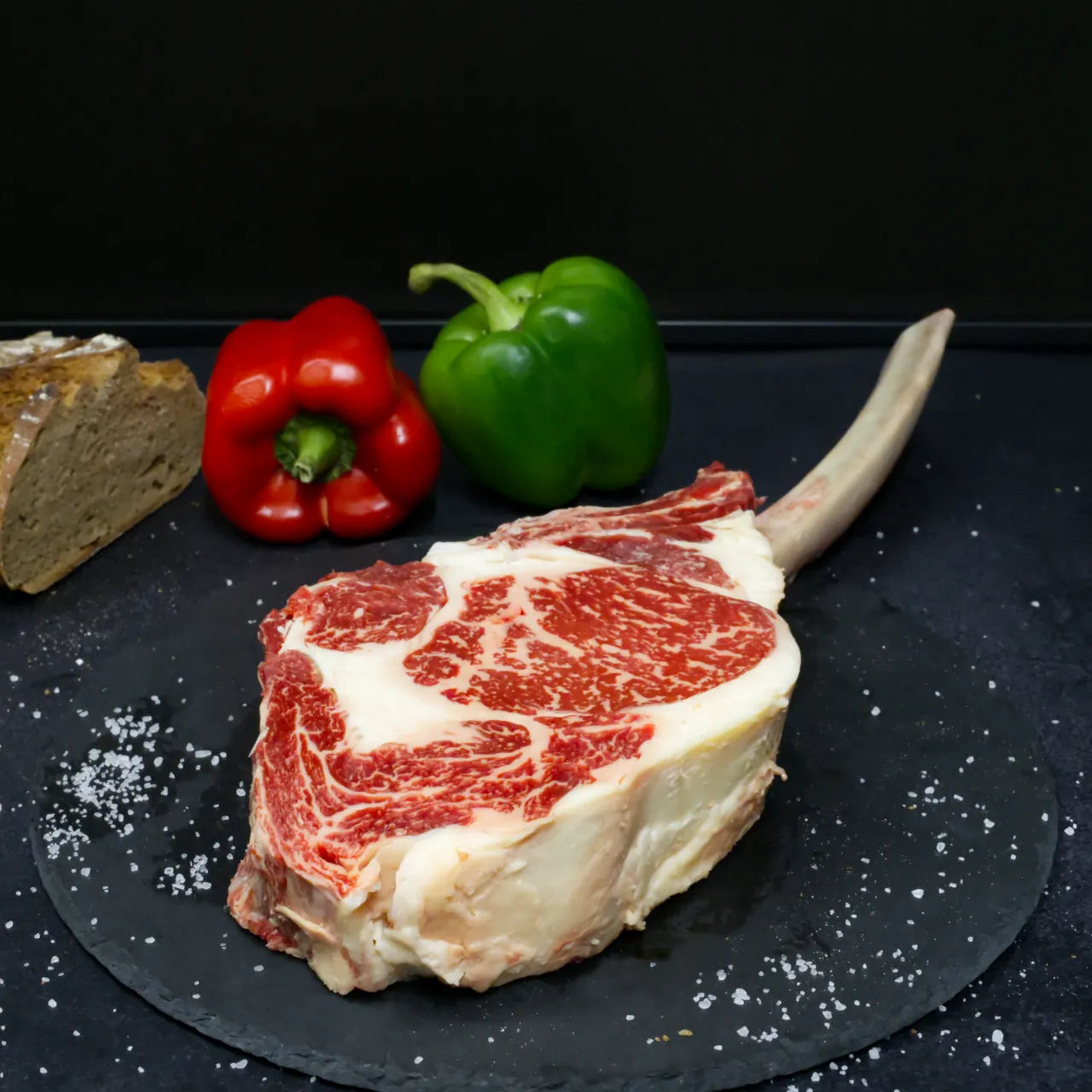
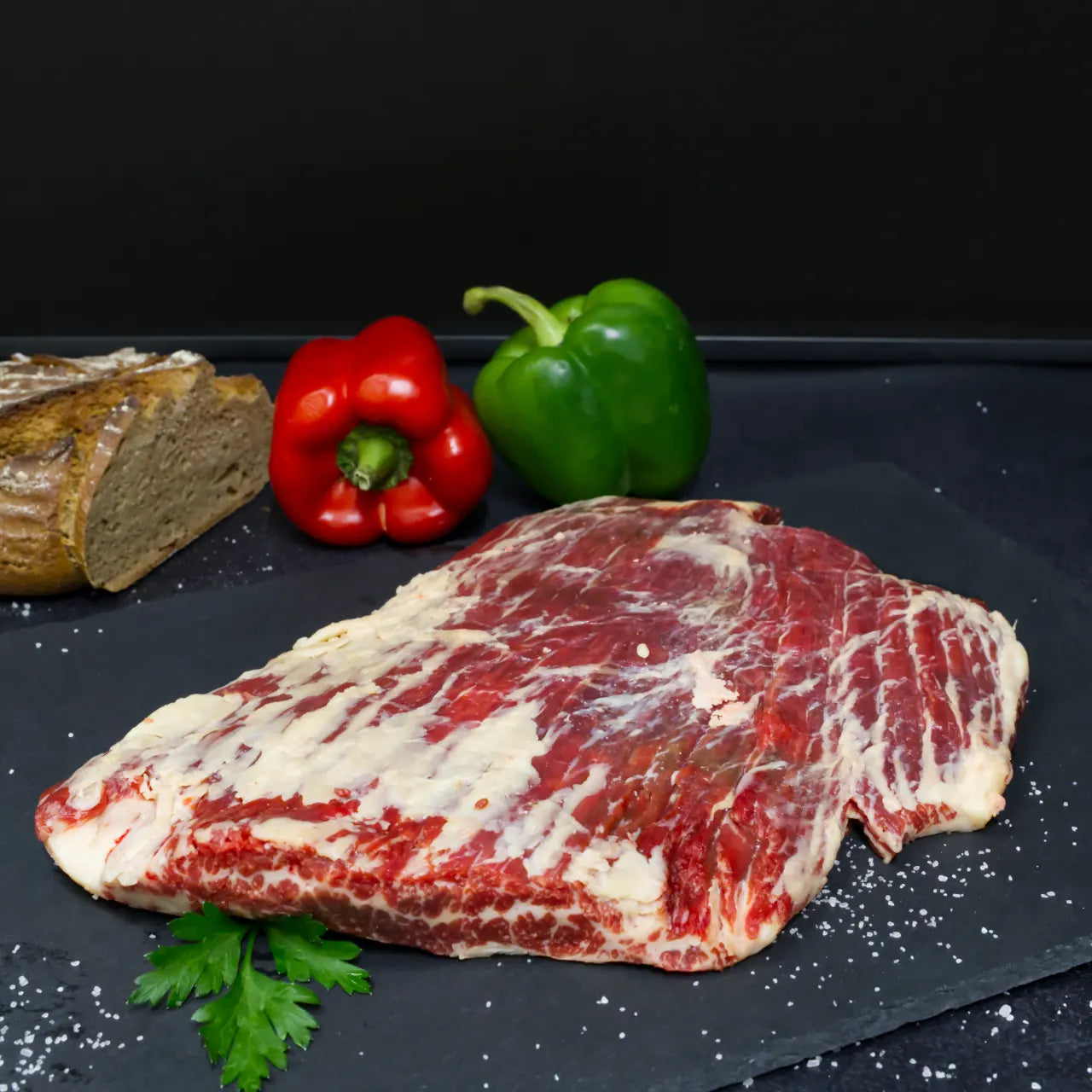
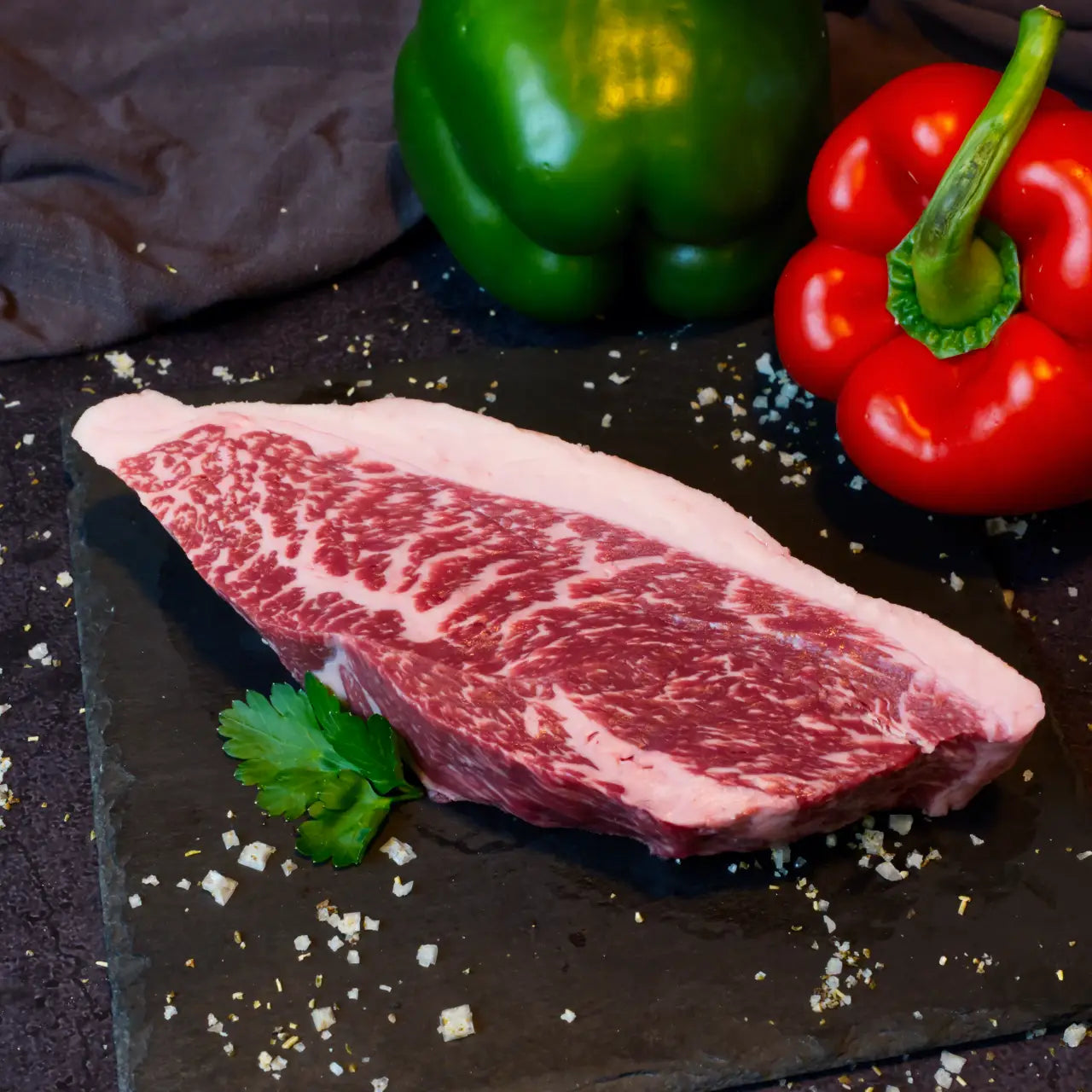
Wagyu is prized for its excellent quality, which is reflected in its tenderness, flavor, and striking marbling. It is considered particularly tender and delicate in flavor because the fatty acids contained in the meat are particularly well-developed due to the animals' diet. The marbling is achieved by the high proportion of intramuscular fat, which accumulates in small fatty veins between the meat fibers and melts during frying. The result is a particularly premium meat that is highly sought after by gourmets. Wagyu beef also has the advantage of being low in cholesterol, thus contributing to a healthy diet. Wagyu is easy to prepare because its high fat content means it requires no additional fat. Whether as a steak or burger, Wagyu is a culinary delight that should definitely be savoured.
Origin of Wagyu beef and its importance in Japan
Wagyu cattle originate from Japan and are among the most famous cattle in the world. The name "Wagyu" translates as "Japanese cattle." The animals have been bred on the island for over 1,000 years and for a long time were found exclusively there. The exceptionally tender and juicy meat of Wagyu cattle is prized worldwide and commands a correspondingly high price. In its homeland, Wagyu cattle are primarily used in traditional dishes such as sukiyaki and shabu-shabu. The high quality of the meat is achieved through special rearing methods, in which the animals are fed grass, silage, hay, and straw, among other diets. Wagyu has great cultural significance. Annual competitions are held on the island to find and award the best Wagyu prefecture and Wagyu.
Häufige Fragen zu Wagyu Rind
Wagyu is a breed of cattle originating from Japan and known for its high-quality meat. It is characterized by very fine marbling, resulting in a particularly tender and juicy texture. The rearing and slaughtering of Wagyu cattle is laborious, and the prices are correspondingly high. Wagyu beef is often considered a delicacy and served in upscale restaurants.
Because the cattle are usually reared for twice as long (compared to conventional cattle breeds) in small herds and the feed consumption is very high, Japanese Wagyu meat is particularly expensive.
Wagyu is characterized by particularly fine marbling, resulting in incomparably tender and juicy meat. Compared to regular beef, Wagyu beef is more expensive and much more exclusive.
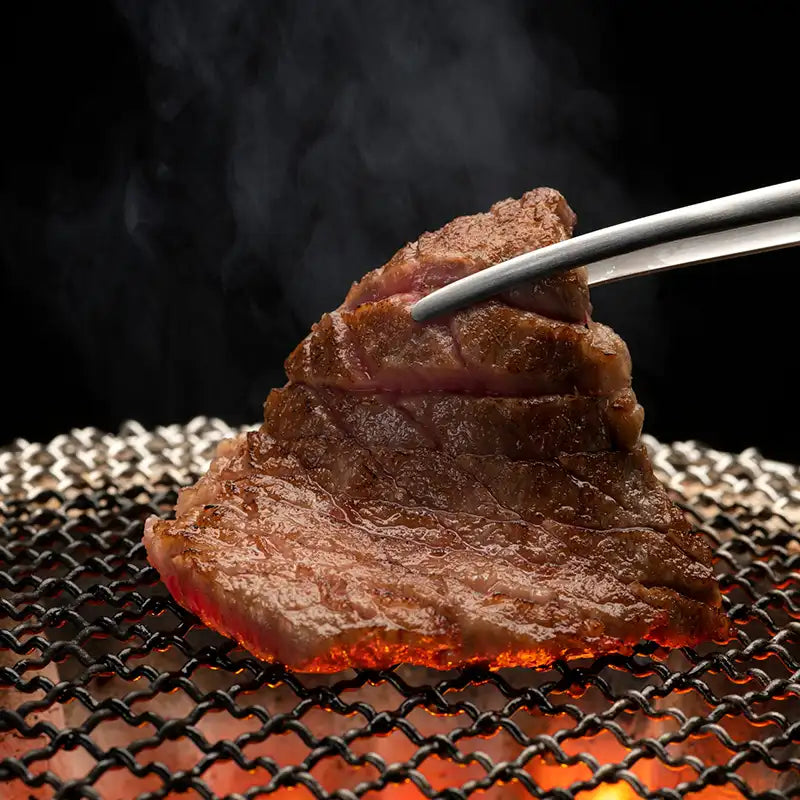
Wagyu should be prepared gently to avoid damaging the tender meat. The meat can be roasted, grilled, or cooked sous vide. It's important to monitor the meat's internal temperature to avoid overcooking.
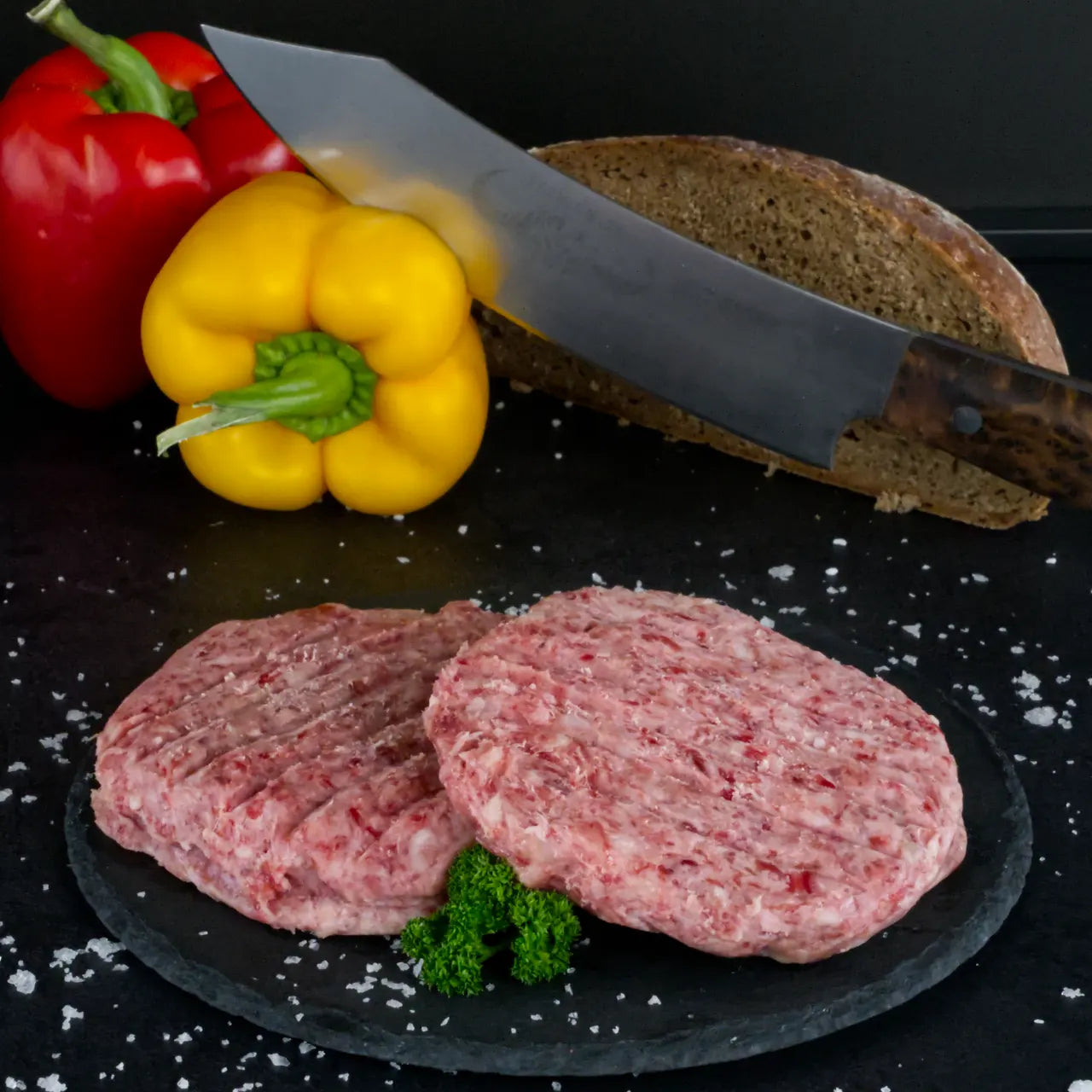
High-quality Wagyu steak cuts such as rib eye, fillet, and striploin, as well as ribs and burger patties, are particularly suitable for Japanese Wagyu. However, these should not be overseasoned to ensure the delicate flavor of the meat is still evident after searing.
Wagyu-Fleisch benötigt aufgrund des hohen Fettgehalts nur kurze Garzeiten.
Lassen Sie das Fleisch zunächst 30 Minuten bei Raumtemperatur ruhen, braten Sie es anschließend scharf für 1–2 Minuten pro Seite an, garen Sie es bei niedrigerer Temperatur fertig und lassen Sie es vor dem Servieren nochmals etwa 5 Minuten ruhen.